
Suite 2993, Unit 3A, 34-35 Hatton Garden, Holborn, London EC1N 8DX United Kingdom

The Future of Data Mining in UK Businesses: From Manual Reporting to Intelligent Decision Pipelines

In an era where data doubles faster than ever before, and businesses compete on insight rather than intuition, data mining is shifting from a back-office reporting tool to the heart of strategic decision-making. For UK businesses, this transition marks a decisive break from manual reporting toward automated, intelligent pipelines that deliver actionable insight in real time — transforming how decisions are made, operations are optimised, and value is created.

Table of Contents

  • Why Data Mining Matters in 2026 and Beyond
  • From Manual Processes to Intelligent Pipelines
  • Key Trends Driving the Shift to Intelligent Decision Pipelines
  • Industry Applications: Where Data Mining Changes the Game
  • Why UK Businesses Still Struggle to Become Truly Data-Driven
  • How UK Businesses Can Transition Smoothly to Intelligent Decision Pipelines
  • What the Future Holds for Data Mining in UK Businesses


Why Data Mining Matters in 2026 and Beyond?

Data mining, the automated process of discovering patterns and insights from large data sets, has never been more critical. With digital data volumes exploding across transactions, customer interactions, IoT devices, and operational systems, the ability to extract meaning from that information has become an essential competitive advantage.

Industry research shows the UK data analytics market is expanding strongly, with revenues expected to grow from roughly $4.6 billion to over $19 billion by 2030, reflecting rising demand for tools that support automated insights and data-driven decisions. Rather than simply generating static reports, modern data mining platforms harness AI, machine learning, and cloud computing to turn unstructured and structured data alike into decision-ready intelligence.

From Manual Processes to Intelligent Pipelines

Manual Reporting: The Old Paradigm

Traditional reporting typically follows a slow cadence:

  • Data collected by humans
  • Processed at intervals (daily/weekly/monthly)
  • Shared end reports generated for review

This approach creates significant delays between data capture and insight delivery, inhibiting responsiveness and accuracy.

Intelligent Decision Pipelines: The New Standard

In contrast, an intelligent decision pipeline uses automation to:

  • Ingest data continuously from multiple sources (CRM, ERP, IoT, web logs)
  • Transform and cleanse data automatically
  • Apply analytics and predictive models in near-real time
  • Deliver insights directly into dashboards or operational systems

This paradigm shift eliminates bottlenecks, enabling leaders to act on live insights rather than rear-view data.

Key Trends Driving the Shift to Intelligent Decision Pipelines


1) AI and Machine Learning Integration

AI-augmented analytics doesn’t just automate routine tasks — it detects patterns and predicts trends that manual analysis might miss. UK firms increasingly embed machine learning into their data workflows to:

  • Add predictive capabilities
  • Automate anomaly detection

2) Real-Time & Cloud-Enabled Analytics

Cloud platforms democratise access to advanced analytics tools, allowing even SMEs to build powerful data mining pipelines without large upfront infrastructure costs. UK businesses are embracing real-time analytics to respond quickly to:

  • Market changes
  • Operational changes

3) Augmented Analytics for Faster Decisions

Augmented analytics combines AI with traditional analytics, helping non-technical users uncover insights without deep specialist skills. This is crucial as the demand for actionable insight grows across departments, not just in IT or analytics teams.

4) Growing Demand for Data Literacy

With analytics becoming embedded across every department, organisations are realising that technology alone doesn’t create value. The real advantage comes from equipping people with the skills to:

  • Interpret insights
  • Challenge assumptions
  • Translate data into practical decisions

Industry Applications: Where Data Mining Changes the Game

1) Retail & E-Commerce

Retailers use analytics to understand customer behaviour and optimise inventory based on demand forecasting, helping:

  • Reduce stockouts
  • Improve customer satisfaction

2) Manufacturing

Manufacturers apply analytics to monitor machine performance and predict maintenance needs before breakdowns occur, helping:

  • Enhance productivity
  • Reduce downtime

3) Finance & FinTech

Banks and fintech firms rely on data mining for:

  • Risk assessment
  • Fraud detection
  • Compliance reporting

Transaction data and behavioural models detect suspicious activity in real time, improving security and customer trust.

4) Healthcare

Charting patient flow or resource utilisation, analytics in healthcare has improved operational efficiency and patient outcomes through the following, drawn from diverse data sources:

  • Predictive modelling
  • Real-time insights

Why UK Businesses Still Struggle to Become Truly Data-Driven?

Even with clear benefits, many UK organisations encounter structural and cultural barriers that slow their shift toward intelligent decision pipelines.

1) Poor Data Quality

When data is incomplete, duplicated, or inconsistent, it erodes trust in analytics outputs. Teams hesitate to use insights for decision-making, leading to slow adoption and continued reliance on manual reporting. Improving data quality is often the first — and most difficult — transformation step.

2) Siloed and Fragmented Systems

Legacy tools, departmental data silos, and disconnected software ecosystems make it difficult to create a single source of truth. Without unified pipelines, businesses cannot automate analytics or produce real-time visibility across operations.

3) Skills and Capability Gaps

The demand for data analysts, data engineers, and AI specialists continues to outpace supply. Many teams are comfortable generating reports but not interpreting advanced analytics, predictive models, or automated insights — limiting the impact of technology investments.

4) Tool Overload and Misaligned Investments

With hundreds of analytics tools available, organisations often purchase overlapping platforms without a clear long-term strategy. Instead of simplifying operations, this creates unnecessary complexity, rising costs, and inconsistent insights across departments.

Overcoming these challenges requires more than technology — it demands clear governance, the right infrastructure, and a culture that champions insight-driven decision-making.

How Can UK Businesses Transition Smoothly to Intelligent Decision Pipelines?

Building an intelligent pipeline is not a single project — it’s an operational shift. These best practices help organisations evolve from manual reporting to automated, insight-driven workflows.

1) Establish Robust Data Governance

Set clear rules for:

  • Data ownership
  • Quality standards
  • Access controls
  • Security

Strong governance ensures that analytics outputs remain accurate, compliant, and trusted across the organisation.

2) Automate Data Integration at Scale

Leverage the following to centralise data with minimal manual intervention:

  • ETL/ELT automation
  • API connectors
  • Cloud data platforms

Automation reduces latency, improves reliability, and enables the creation of real-time analytics flows.

3) Prioritise Tools That Serve Business Goals

Rather than adopting the newest trending platform, organisations should select analytics and AI tools that directly support their operational needs — whether that’s:

  • Forecasting demand
  • Improving customer experience
  • Optimising workflows

4) Build a Data-Literate Workforce

Train teams across all departments to read, interpret, question, and apply insights. When employees understand how to use data, decision-making becomes faster, more proactive, and more aligned with the organisation’s strategic goals.

What the Future Holds for Data Mining in UK Businesses?

Data mining, AI, and real-time analytics are shifting from “useful enhancements” to “non-negotiable foundations of competitiveness”. By 2026 and beyond, UK organisations will operate in an environment where speed, automation, and intelligence define market leadership.

1) End-to-End Automation Becomes Standard

Businesses will move beyond isolated dashboards or manual exports. Fully automated pipelines, from data ingestion to insight delivery, will become the norm:

  • Reducing human error
  • Enabling faster, repeatable decision cycles

2) AI-Driven Analytics Embedded Across Functions

AI and machine learning will no longer sit within the data team alone. Sales, operations, finance, customer support, and HR will increasingly rely on the following to guide daily decisions:

  • Predictive models
  • Automated insights
  • Anomaly detection

3) Real-Time Decision Intelligence as a Competitive Edge

Real-time visibility across operations will distinguish agile, high-performing companies from slower competitors who rely on periodic reporting. Organisations able to react instantly to risk, customer behaviour, or operational disruption will lead their markets.

4) UK Businesses Prioritise Data-Led Innovation

A recent study indicates that 47% of UK firms plan significant investments in data-led innovation by 2026, outpacing global averages — a sign that UK organisations now view intelligent analytics as a direct growth lever.

5) Data & Analytics Confidence & Priorities

A Salesforce report found that most UK analytics and IT leaders see trusted data as critical. Additionally, less than half (47%) were completely confident in their organisational data, underlining real-world barriers and the importance of data quality.

Conclusion

The future for UK businesses lies in turning data into decisions — automatically, accurately and at scale. Manual reporting is giving way to intelligent decision pipelines powered by:

  • Data mining
  • AI
  • Cloud computing
  • Real-time analytics

Organisations, like Aritel Limited, that build robust, automated data strategies now will be the ones making smarter, faster strategic moves tomorrow and beyond.
AI Strategy and Startup Growth in 2026: What Founders Must Know

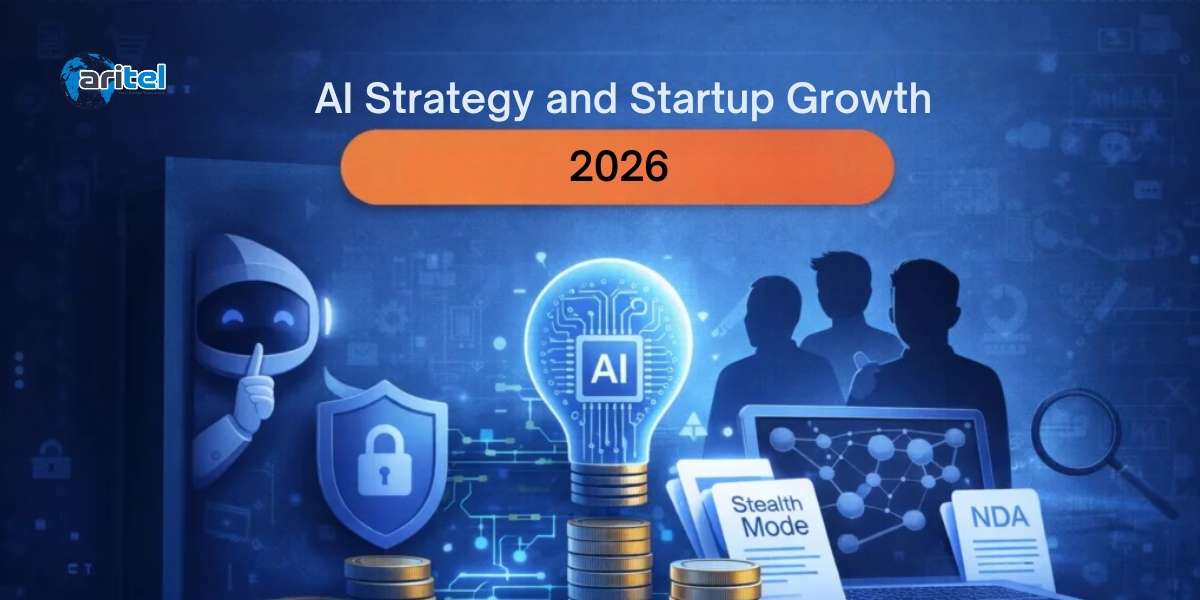
In 2026, artificial intelligence isn’t just influencing the startup ecosystem — it is re-architecting it. AI has evolved from a tactical add-on into a strategic operating layer that determines how startups design products, optimise customer journeys, and scale with precision.

Founders are no longer debating whether to use AI. They are now evaluating how deeply AI should shape their product architecture, communication workflows, market intelligence, and operational decisions. This shift is not incremental. It cuts into the fundamentals of strategy — including data quality, organisational capability, network infrastructure, and communication systems. AI is now redefining who learns faster, who scales leaner, and who builds more resilient customer value.

This article explores how AI is reshaping startup strategy in 2026 — and how Aritel’s digital-first telecom solutions provide the underlying connectivity, unified communications, and infrastructure that intelligent businesses rely on.

Table of Contents

  • AI as a Strategic Operating System — Not an Add-On
  • Organisational Capability: Lean Teams Powered by AI
  • Growth Intelligence: From Funnels to Continuous Learning Loops
  • A Practical Framework for Strategic AI Integration
  • Risks & Strategic Guardrails
  • Looking Ahead: AI as a Competitive Differentiator

AI as a Strategic Operating System — Not an Add-On

Historically, startups used AI for surface-level optimisation — automating emails, improving ad targeting, or enhancing basic analytics. Today, AI functions as an organisation-wide intelligence layer, influencing every decision loop:

Product Design

  • Predictive models forecast which features drive retention.
  • AI identifies friction across the UX flow.
  • Dynamic UX generation adapts interfaces based on behaviour patterns.

Growth Mechanics

  • Instead of one-off campaigns, AI enables always-on growth loops.
  • Every user interaction contributes to the next strategic iteration.
  • Acquisition, retention, and monetisation become self-optimising.

Decision Systems

  • AI closes the gap between signal → insight → action.
  • Teams can make real-time strategic decisions driven by unified data.

This is where connectivity and communications matter. AI cannot operate effectively over fragmented systems. Businesses require:

  • High-speed full fibre broadband
  • Consistent mobile data connectivity
  • Integrated cloud communication systems

Aritel’s business broadband, 5G-ready mobile plans, and VoIP-based unified communications align perfectly with AI-driven operating structures.

Organisational Capability: Lean Teams Powered by AI

AI-driven teams operate differently:

  • Smaller headcounts
  • Higher strategic output
  • Cross-functional collaboration mediated by AI
  • Reduced manual workload due to intelligent automation

Startups now prioritise:

  • Data-literate generalists
  • Judgement-capable decision makers
  • Teams skilled at leveraging AI tools

For example, a fintech company automates fraud detection and credit scoring. Instead of 50 analysts, a 5-member team oversees:

  • Model performance
  • Regulatory compliance
  • Edge-case human judgment

This mirrors the efficiency startups achieve when they pair AI systems with the right communication and connectivity infrastructure, such as:

  • Cloud telephony
  • AI-enabled customer service routing

Aritel Limited already supports similar digital-native businesses across the UK with enterprise communication solutions.

Growth Intelligence: From Funnels to Continuous Learning Loops

Traditional funnels fail because they assume linearity. But customer behaviour is non-linear and volatile.

AI transforms growth into a closed learning loop:

  • Predicting churn
  • Suggesting retention interventions
  • Personalising communication
  • Adjusting product features in real-time
  • Identifying high-value user micro-segments

This depends heavily on scalable data flow, which in turn depends on stable connectivity, making the following key parts of the AI loop:

A Practical Framework for Strategic AI Integration

Stage 1: Discover

  • Define business outcomes (churn reduction, CAC, retention uplift).
  • Audit data sources and connectivity gaps.
  • Assess infrastructure readiness.

Stage 2: Design

  • Build use-cases tied to outcomes.
  • Prioritise by feasibility vs impact.
  • Architect communication and connectivity layers.

Stage 3: Deploy

Stage 4: Learn

  • Track insight velocity.
  • Make data-driven product and GTM decisions.

Stage 5: Loop

  • Institutionalise weekly learning cycles.
  • Use AI feedback to refine operations continuously.

Risks & Strategic Guardrails

AI adoption introduces extraordinary potential, but also significant structural risks when systems rely on poor data, weak networks, or ungoverned automation. Founders must recognise and mitigate these vulnerabilities early:

1) Data Quality Failures & Flawed Predictions

AI is only as reliable as the information feeding it. Incomplete, inconsistent, or siloed data leads to inaccurate forecasting, unreliable recommendations, and misleading insights. For early-stage companies, poor data hygiene can collapse product direction, distort customer segmentation, and derail go-to-market strategies.

2) Operational Over-Reliance

Many startups fall into the trap of allowing AI tools to make decisions faster than teams can validate them. Without proper human-in-the-loop oversight, AI outputs can turn into blind spots, creating brittle systems that break under unexpected conditions.

3) Regulatory & Compliance Exposure

AI-driven workflows increase exposure to:

  • GDPR violations
  • Improper data handling
  • Non-transparent model decisions
  • Communication system non-compliance

A single compliance failure can threaten funding, trust, and market access.

4) Model Bias & Security Challenges

AI systems can inherit bias, expose sensitive datasets, or become targets of cyberattacks such as model poisoning or prompt exploits. Startups must build defensive layers to ensure fairness, resilience, and protection from evolving threats.

5) Network Performance & Infrastructure Gaps

Many risks originate not from AI itself, but from the infrastructure running it. Unreliable bandwidth, insecure networks, and high-latency communication channels can cause:

  • delayed processing
  • failed data sync
  • corrupted insights
  • outages in automated systems

That is why secure, high-performance connectivity — from full fibre broadband to cloud-ready voice and network solutions — is essential to reducing AI-related risk.

Aritel Limited’s resilient network infrastructure, business-grade connectivity, and compliant communication systems create the stable foundation startups need to train, deploy, and scale AI safely.

Looking Ahead: AI as a Competitive Differentiator

The next generation of UK startups will not win because they use AI — they will win because they can operationalise AI better, faster, and more reliably than competitors. Companies that embed intelligent systems early consistently achieve:

  • Faster iteration cycles: Real-time data flow, automated insights, and continuous feedback enable teams to test, refine, and scale ideas faster than traditional product cycles.
  • Improved retention: AI-driven personalisation, behavioural modelling, and targeted communication increase customer lifetime value and reduce churn.
  • More accurate market pivots: Predictive models detect emerging patterns early, helping founders shift direction before market conditions change.
  • Leaner, more efficient teams: Automated workflows reduce manual load, allowing small teams to operate like scaled organisations.
  • Higher operational clarity: Continuous intelligence sharpens decision-making, aligning teams around measurable outcomes instead of assumptions.

But AI’s true strategic value only emerges when backed by strong digital foundations, such as:

  • Consistent uptime
  • Secure data pathways
  • Scalable cloud communication channels

This is exactly what Aritel Limited delivers. With enterprise-grade connectivity, cloud-optimised telecom solutions, and secure communication infrastructure, Aritel enables startups to transform AI from a tool into a long-term competitive advantage.

Conclusion: Strategy Redefined

AI is no longer a technical milestone — it is a strategic catalyst powering the next generation of business models. The startups that win in 2026 will be those that design AI into their operating rhythms, feedback loops, and decision systems from day one. But intelligent systems require intelligent foundations, such as:

  • Resilient connectivity
  • Seamless communication
  • Secure digital frameworks

If you’re a founder looking to embed AI strategically, the next step is to strengthen your infrastructure and competitive edge, and get started with Aritel Limited today.

Data-Driven Decisions: How Automation & AI Are Transforming Digital Marketing for UK Businesses

What if the biggest competitive advantage for UK businesses in 2026 isn’t faster internet, better software, or even AI—but the ability to uncover insights hidden in the data they already own?

Every click, transaction, sensor reading, and customer interaction generates valuable signals, yet most organisations only scratch the surface of what this information can reveal. With connected devices expanding at an unprecedented pace and cloud ecosystems becoming the operational backbone of nearly every industry, companies now face a new challenge: how to transform overwhelming volumes of raw data into clear, strategic action.

Table of Contents

  • The Silent Revolution: How Automated Data Mining Is Redefining Business Analytics in the UK
  • Why Automated Data Mining Matters More Than Ever
  • The Role of IoT and Automation in Modern Data Mining
  • How Are UK Businesses Using Automated Data Mining Today
  • Why Data Quality Is the New Competitive Advantage
  • The Future: AI-Led Business Analytics and the Next Wave of Automation

The Silent Revolution: How Automated Data Mining Is Redefining Business Analytics in the UK

Today, UK businesses generate more data than at any point in history—far beyond what traditional reporting tools can interpret. With connected devices multiplying, cloud-based ecosystems expanding, and customer interactions moving fully online, organisations now face a new challenge: how to convert massive, unstructured datasets into real business value.

This is where automated data mining for business analytics is quietly reshaping the competitive landscape. It’s not just another digital trend—it’s the backbone of how modern companies optimise operations, uncover new revenue opportunities, and deliver better customer experiences across telecoms, retail, finance, technology, and beyond.

Why Automated Data Mining Matters More Than Ever?

The UK has witnessed a dramatic shift towards data-driven operations, with reports showing:

  • 90% of the world’s data was created in the last two years, driven primarily by IoT and connected systems.
  • UK organisations now use an average of 73 different data sources for strategic decision-making.
  • Businesses adopting automated analytics report significantly faster decision-making, with many achieving real-time or near-real-time insights compared with traditional manual reporting.

As data complexity rises, manual analytics simply can’t keep up. Automated data mining fills this gap by:

  • Rapidly scanning thousands of data points
  • Detecting anomalies in real time
  • Identifying hidden relationships and behaviours
  • Reducing human error
  • Supporting predictive modelling and forecasting

This shift is transforming how UK companies operate—from how telecom providers manage network performance to how finance teams assess customer risk & how digital marketing agencies target high-intent audiences.

The Role of IoT and Automation in Modern Data Mining

IoT has become a major catalyst in the analytics revolution. With an estimated 50 billion IoT devices expected globally by 2035, UK businesses are increasingly integrating sensors, smart meters, connected vehicles, and automated retail systems into daily operations. This influx of machine-generated data has three major effects:

   1. Higher Data Accuracy

IoT removes guesswork. Automated logs provide precise, time-stamped insights—vital for industries like:

  • Logistics
  • Utilities
  • Telecoms

   2. Predictive Capabilities

Sensors allow organisations to predict failures before they happen, which results in:

  • Reduced outages
  • Improved service delivery
  • Lower maintenance costs

  3. Real-Time Decision Making

Automated analytics tools can detect the following issues instantly:

  • Network congestion
  • Fraud patterns
  • Operational bottlenecks

This is something manual analysis cannot achieve. As the volume of device-to-device communication increases, data mining becomes not just beneficial but essential.

How Are UK Businesses Using Automated Data Mining Today?

Organisations across the UK are applying advanced analytics in surprisingly transformative ways:

Telecommunications

  • Predicting network traffic spikes
  • Analysing customer churn signals
  • Improving QoS (Quality of Service) across fibre and mobile networks

Digital Marketing & Web Development

  • Identifying high-performing user journeys
  • Automating campaign optimisation
  • Detecting fraudulent clicks and abnormal ad behaviour

Debt Advisory & Financial Management

  • Predicting repayment behaviours
  • Identifying early indicators of financial distress
  • Enhancing approval and underwriting processes

Retail & eCommerce

  • Personalising product recommendations
  • Tracking real-time customer behaviour
  • Forecasting inventory demand with up to 85% accuracy

These use cases all share one common thread: automation reduces complexity and unlocks insights that were previously inaccessible.

Why Data Quality Is the New Competitive Advantage?

Even the most advanced analytics system fails without high-quality data. Research published in 2025 found that:

  • 94 % of organisations say poor-quality data impacts their operations and leads to wasted resources and additional costs (e.g., time, inefficiency).
  • Only 27% of organisations trust the integrity of their own customer data.

This is where automated data mining delivers a critical advantage:

  • It removes duplicate and incomplete records
  • It standardises formatting
  • It identifies “silent gaps” in processes
  • It enriches existing datasets with machine learning

Businesses that prioritise clean, structured, real-time data are better positioned to scale efficiently—especially those operating in competitive sectors like telecoms, digital marketing, and financial services.

The Future: AI-Led Business Analytics and the Next Wave of Automation

The next evolution of data mining will be shaped by generative AI, autonomous systems, and real-time analytics.

Here’s what UK businesses can expect:

  • AI-Driven Forecasting: Predictive insights that map customer behaviour, financial risk, operational efficiency, and emerging opportunities more accurately than ever.
  • Hyper-Automated Analytics Pipelines: End-to-end workflows—from ingestion to modelling—powered entirely by automation.
  • Self-Optimising Networks & Systems: Especially relevant for telecom providers, where automated signals determine routing, bandwidth distribution, and service allocation.
  • Privacy-Centred Data Intelligence: A growing emphasis on encryption, compliance, and ethical data mining under UK GDPR frameworks.

Businesses that adopt these advancements early will gain a measurable edge in agility, customer understanding, and operational control.

Conclusion

Automated data mining is no longer a technical luxury—it’s a business necessity in an economy driven by real-time decision making, intense competition, and digital-first customer expectations. Whether your organisation is navigating telecom complexities, building intelligent digital experiences, enhancing financial assessments, or strengthening marketing performance, the ability to turn raw information into actionable insight will define your growth trajectory.

Aritel Limited supports businesses by delivering the technology, analytics frameworks, and digital systems needed to make that transformation seamless, strategic, and scalable. If your organisation is ready to build a smarter, data-driven future, we are here to help you take the next step.

Invisible Networks: How IoT-Driven Automation Is Changing UK Business Communications

In the UK’s rapidly evolving business landscape, infrastructure is becoming invisible. It no longer begins and ends with wires, landlines, or a single office — nor is it defined solely by speed. Instead, business communications are now shaped by small decisions happening thousands of times a day: an app signalling stock levels, a sensor detecting equipment wear, a mobile team coordinating repairs, or a VoIP call routing a customer complaint.

This shift — powered by IoT (Internet of Things) and automation — has quietly transformed every organisation that uses data, devices, and networks to make real-time decisions. With this transformation, the expectations placed on networks have undergone a radical change.

Where once legacy fixed lines sufficed, today’s organisations demand the UK’s telecommunications infrastructure that supports distributed systems, continuous data flows and resilient communication paths. In this article, we examine how IoT-driven automation is transforming business communications, its implications for UK businesses, and how modern connectivity is shaping this new operational landscape.

Table of Contents

  • What Makes a Network “Invisible”
  • Why IoT Means Business Communications Must Evolve
  • The Emerging Role of IoT in Communications
  • Automation Demands Higher Network Expectations
  • How Modern UK Networks Support Automation
  • VoIP and Internet Phone Systems: Automation in Communications
  • Combining Data, Devices, and Decisions
  • Practical Challenges in IoT Automation

What Makes a Network “Invisible”?

Traditionally, networks were visible, physical, and centralised:

  • Desk phones plugged into wall sockets
  • Landlines dedicated to voice
  • On-site servers handling core applications
  • Copper broadband supplying internet

Today, automation and IoT devices have distributed these functions across wide areas & platforms:

  • Wireless sensors in warehouses and stores
  • Mobile devices for field teams
  • Cloud-based applications accessible anywhere
  • Automated triggers that operate without human input

Rather than asking “Does the network work?”, businesses now ask “Can it support automated decisions in real time?” This is the essence of invisible networking — it is no longer about local infrastructure but about fluid, resilient, autonomous connectivity.

Why IoT Means Business Communications Must Evolve?

The rise of Internet of Things (IoT) technologies is no longer a futuristic prediction — it is happening now across UK industries:

  • Retail and logistics use RFID and environmental sensors
  • Manufacturers gather real-time assembly and machine data
  • Healthcare facilities monitor assets and patient locations
  • Service providers automate scheduling and resource allocation

These systems generate continuous streams of data. If networks cannot keep up, automations stall, alerts are delayed, and decisions are compromised. A 2025 Connected Nations analysis showed that UK mobile data usage has expanded significantly year-on-year. Full-fibre availability now exceeds 79% of premises, reflecting how organisations expect robust, always-on access as the default.

The Emerging Role of IoT in Communications

In many organisations, IoT systems are not stand-alone; they are integrated into communication workflows:

  • A sensor could trigger a VoIP call to a support agent
  • Data anomalies could send SMS or app notifications to mobile workers
  • Temperature alerts could initiate automated emails or system actions
  • Inventory counts could auto-update CRM & ERP systems

Even voice communication is moving toward automation:

  • Smart call routing based on real-time data
  • Voice assistants integrating with CRM and order systems
  • Customer notifications triggered by system events

For businesses that still rely on legacy voice or isolated broadband connections, these automated patterns become a limiting factor — not just an inconvenience.

Automation Demands Higher Network Expectations

Conventional fixed network setups were designed for predictable, centralised communication: office desks, dedicated telephone numbers, and human-initiated calls.

By contrast, IoT-driven automation requires:

  • Always-on connectivity: Devices call systems autonomously — not on human schedules.
  • Low latency: Delays impact real-time decision making, especially in logistics, retail and safety-critical environments.
  • High bandwidth and resilience: Multiple devices, simultaneous connections and data streams strain older networks.
  • Distribution over broad areas: IoT is effective only if networks extend to all operational spaces — from warehouses to vehicles, remote sites and retail floors.

How Modern UK Networks Support Automation?

Two technologies are now central to this shift:

1) Fibre Optic Internet & FTTP Broadband UK

Full-fibre (FTTP) delivers consistent, high-capacity connectivity with minimal latency, making it ideal for:

  • Large data transfers
  • Cloud-hosted apps
  • Voice, video and voice-data integration
  • Autonomous system coordination

FTTP broadband is now widely adopted across the UK, enabling businesses to rely on broadband as the backbone of operations rather than a stopgap.

2) 5G and Business Mobile Solutions

Mobile networks complement fibre by offering:

  • Flexible coverage for remote or temporary sites
  • Backup connectivity when fibre is unavailable
  • Support for mobile IoT endpoints
  • Reduced dependency on physical infrastructure

According to research, UK mobile networks cover over 96% of populated areas with 4G, and 5G availability continues to expand rapidly. This means organisations can support automation even outside traditional offices.

VoIP and Internet Phone Systems: Automation in Communications

Internet phone systems and VoIP services for business are increasingly designed to integrate with broader automation platforms:

  • Automated call triggers from system events
  • Scalable call flows linked to data alerts
  • Remote workforce support via cloud telephony
  • Lower cost per communication relative to legacy lines

These systems reduce human intervention in routine communications, enabling proactive responses and faster resolution cycles.

Combining Data, Devices, and Decisions

The true power of IoT is not in isolated data — it’s in connected workflows:

  • A logistics manager receives automated routing updates
  • A retail system triggers stock replenishment alerts
  • A field technician gets predictive maintenance schedules
  • A customer support team sees system health indicators

In each case, the network is not a backdrop — it is a strategic enabler. For many UK SMEs, this means rethinking how connectivity is planned, provisioned and managed.

Practical Challenges in IoT Automation

While IoT promises efficiency, businesses should be aware of common pitfalls:

  • Connectivity Gaps: If devices cannot reliably reach the network, automation fails.
  • Latency and Jitter: Even small delays can disrupt real-time workflows.
  • Security Considerations: IoT systems expand the attack surface, demanding strong monitoring and encryption.
  • Integration Complexity: Connecting legacy systems with modern cloud apps and voice tools can require careful planning.

These challenges are not barriers — they are design considerations for modern business networking.

The Future of Business Communications

As UK businesses continue to adopt IoT and automation, the role of telecom infrastructure will only grow more strategic. From factory floors to frontline field teams, invisible networks are becoming the backbone of operational agility.

The shift is evident not because of hype, but because organisations that embrace automation and connectivity consistently:

  • Improve responsiveness
  • Reduce manual intervention
  • Scale operations without proportional cost rises
  • Support hybrid work models seamlessly

Conclusion

Invisible networks — those that work reliably without attention — are becoming essential to modern business communications. IoT-driven automation depends on robust business telecommunications, including:

  • Fibre optic internet
  • Mobile connectivity
  • VoIP
  • Cloud phone platforms

For organisations assessing their next connectivity strategy, the focus should be on systems that:

  • Enable automation
  • Support data flows
  • Enhance operational predictability

When you’re ready to explore how resilient, automation-friendly networks can support your organisation’s growth and communication needs, providers like Aritel Limited, with expertise in business internet, cloud phone service and telecom services, can guide the transition with confidence.

From Fixed Lines to Fluid Networks: The Role of 5G and Full-Fibre in Modern UK Operations

For decades, UK businesses were built around fixed infrastructure. Desk phones, copper broadband connections, and on-site systems changed the way organisations communicated, traded, and operated their businesses. That model is now slowly being replaced by something much more flexible.

Across retail, logistics, professional services, healthcare, and manufacturing, operations are becoming:

  • Location-agnostic
  • Data-driven
  • Increasingly automated

The networks supporting them must adapt accordingly. This is where full-fibre broadband and 5G connectivity are changing not just speed, but the structure of modern UK operations. Rather than replacing one technology with another, many organisations are now building fluid networks — connectivity models that combine fibre, mobile, cloud, and automation to support how work actually happens today.

Table of Contents

  • Why Fixed Networks No Longer Match Modern Operations
  • Full-Fibre as the Backbone of Digital Operations
  • The Expanding Role of 5G in Business Connectivity
  • From Redundancy to Resilience: Why Hybrid Networks Matter
  • Cloud Telephony and the Decline of Fixed Phone Lines
  • Automation and IoT: Why Network Design Now Matters More
  • Cost Control in a Converged Connectivity Model
  • Security and Compliance in Modern Networks

Why Fixed Networks No Longer Match Modern Operations?

Traditional fixed-line connectivity was designed for predictable, centralised environments. Today’s operations look very different. UK businesses increasingly rely on:

  • Distributed teams and hybrid working
  • Cloud-based platforms rather than on-premise systems
  • Real-time data from multiple locations
  • Mobile workflows rather than desk-bound processes

According to Ofcom, data usage on mobile networks has more than tripled over the past five years, while demand for business-grade fibre has accelerated as cloud adoption becomes standard. Fixed copper lines, originally designed for voice, struggle to meet these requirements reliably. This shift is not about abandoning fixed infrastructure altogether — it is about removing dependence on a single point of connectivity.

Full-Fibre as the Backbone of Digital Operations

Full-fibre (FTTP) broadband provides the stability & capacity modern businesses require for core systems. Unlike copper-based services, fibre delivers consistent performance regardless of distance or demand peaks.

In the UK, FTTP broadband availability now exceeds 79% of premises, driven by national rollout programmes and private investment. For businesses, this has unlocked new operational possibilities.

What Full-Fibre Enables

  • Reliable access to cloud platforms & SaaS tools
  • High-quality VoIP phone systems for business use
  • Stable connectivity for data-heavy applications
  • Scalable bandwidth as operations grow

For many organisations, fibre now forms the primary connection supporting finance systems, customer platforms, inventory tools, and internal communications. However, fibre alone does not address every operational risk — particularly where mobility, resilience, or rapid deployment are required.

The Expanding Role of 5G in Business Connectivity

5G is often discussed in terms of speed, but its real value for UK businesses lies in flexibility & resilience. With improved latency, capacity, and coverage, 5G is increasingly used alongside fibre rather than as a replacement.

Practical Business Uses of 5G

  • Backup connectivity during fibre outages
  • Temporary or mobile site operations
  • Supporting field-based teams and remote assets
  • Enabling IoT-enabled monitoring and automation

UK mobile networks now cover over 96% of populated areas with 4G, with 5G coverage expanding rapidly across cities, transport hubs, and industrial zones. For businesses, this means mobile connectivity is no longer a compromise — it is part of the core infrastructure.

This shift has made business mobile solutions an operational necessity rather than a convenience.

From Redundancy to Resilience: Why Hybrid Networks Matter

Rather than choosing between fibre or mobile, many organisations are adopting hybrid connectivity models. A fluid network typically combines:

  • Full-fibre broadband for primary operations
  • 4G or 5G connectivity for backup and mobility
  • Cloud-based phone systems instead of fixed PBX
  • Centralised management across locations

This approach reduces downtime risk and enables businesses to continue operating even when a single connection fails. For sectors such as retail, healthcare, and logistics, where downtime directly affects revenue or safety, resilience has become a strategic priority.

Cloud Telephony and the Decline of Fixed Phone Lines

As networks evolve, voice services are evolving with them. Fixed analogue lines and on-site PBX telephone systems are increasingly replaced by cloud based phone systems for small businesses and enterprise environments alike.

Modern internet phone systems operate entirely over IP networks, allowing voice to move seamlessly between devices and locations.

Benefits of Cloud-Based Phone Systems

  • No dependency on physical phone lines
  • Consistent service across offices and remote staff
  • Easier scaling without infrastructure upgrades
  • Integration with CRM and collaboration tools

As the UK continues its transition away from legacy voice services, cloud telephony aligns naturally with fibre & mobile-first connectivity strategies.

Automation and IoT: Why Network Design Now Matters More

Connectivity is no longer just about access — it underpins automation and intelligent systems. Across UK industries, connected devices are being used to:

  • Monitor energy usage and equipment health
  • Automate inventory and supply chain processes
  • Improve customer experience through real-time data
  • Support predictive maintenance and analytics

These applications rely on consistent, low-latency networks. Fibre provides the throughput, while 5G enables deployment where wiring is impractical or too slow.

The rise of IoT means businesses must think beyond “internet access” and consider how data flows across sites, devices, and platforms in real time.

Cost Control in a Converged Connectivity Model

While advanced networks may sound expensive, fluid connectivity models can actually reduce long-term costs. Businesses that consolidate voice and data services, fixed and mobile connectivity, and multiple suppliers into fewer platforms often see lower operational overheads & simpler management.

Rather than maintaining separate contracts for broadband, telephony, and mobile, organisations increasingly look for business internet and phone solutions that work together. This reduces duplication, simplifies billing, and improves visibility over usage.

Security and Compliance in Modern Networks

As connectivity expands, so does the need for robust security. Modern fibre and mobile networks support:

  • Encrypted data transmission
  • Centralised monitoring and access control
  • Faster deployment of security updates
  • Improved resilience against service disruption

For UK businesses handling customer data or payment information, network design now plays a direct role in GDPR compliance and operational risk management. Legacy systems often lack the flexibility to adapt to evolving security standards, reinforcing the case for modern, IP-based infrastructure.

Final Thoughts

The move from fixed lines to fluid networks is not a trend — it reflects how businesses now operate. Organisations that adapt early benefit from:

  • Greater operational flexibility
  • Reduced downtime risk
  • Better support for automation and growth
  • Infrastructure that scales with demand

Those who delay often find themselves constrained by systems designed for a very different business environment.

The future of UK business connectivity is not defined by a single technology. It is shaped by how fibre, mobile networks, cloud platforms, and automation work together. From full-fibre broadband supporting core systems to 5G enabling mobility and resilience, fluid networks are becoming the foundation of modern operations. For organisations reviewing their connectivity strategy, the focus should move beyond speed and cost alone. It should be towards adaptability, reliability, and long-term suitability.

When the time comes to assess options or plan a transition, providers like Aritel Limited support UK businesses with connectivity solutions designed for modern operational demands — helping organisations move forward with confidence, not disruption.

Need Help? Talk with us Chatbot