Suite 2993, Unit 3A, 34-35 Hatton Garden, Holborn, London EC1N 8DX United Kingdom

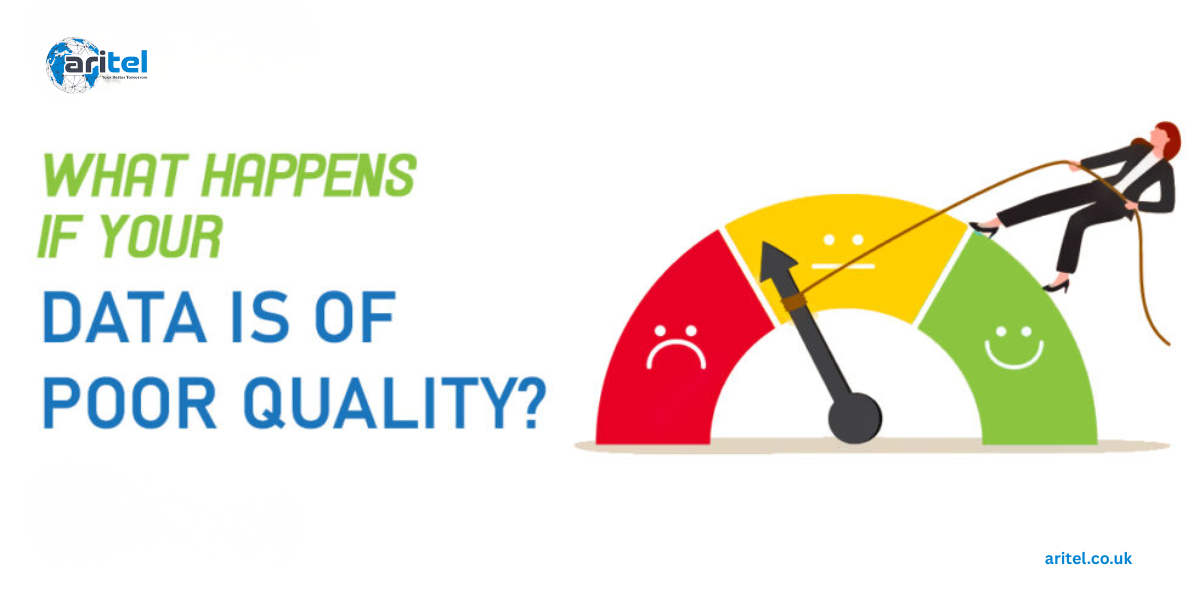
Why Poor Data Quality Is the Silent Profit Killer in UK Outsourcing (And How to Fix It)

In an economy increasingly driven by automation, analytics and outsourced operations, data has become the backbone of decision-making. Yet many UK organisations operate on flawed, incomplete, or inconsistent data. The result isn’t always immediate or obvious — but over time, the impact shows up in rising operational costs, missed opportunities, inaccurate reporting and weakened client relationships.

Poor data quality rarely makes headlines, but it quietly undermines productivity, profitability and strategic planning. As businesses expand their reliance on outsourcing, automation and digital workflows, ensuring reliable data is no longer optional — it is fundamental to performance.

Table of Contents

  • The Hidden Cost No One Tracks
  • Where Bad Data Enters the Outsourcing Ecosystem
  • Why 2026 Is a Turning Point for Data Quality
  • How Poor Data Quality Directly Impacts Profitability
  • The Role of Data Mining in Fixing the Problem
  • Practical Steps UK Organisations Can Take to Improve Data Quality
  • From Data Volume to Data Trust: The New Competitive Edge

The Hidden Cost No One Tracks

Unlike a system outage or a missed deadline, poor data quality does not always cause visible disruption. Instead, it creates a slow, cumulative drag on efficiency.

Incorrect or fragmented data can lead to:

  • Misaligned reporting and KPIs
  • Inefficient allocation of resources
  • Errors in forecasting and planning
  • Reduced confidence in decision-making

Research by IBM has long highlighted that poor data quality costs the global economy trillions annually. While the exact financial impact varies by organisation, the pattern remains consistent: inaccurate data leads to inaccurate decisions, and inaccurate decisions carry real financial consequences.

In outsourcing environments, where multiple teams, platforms, and workflows interact, the risk multiplies further.

Where Bad Data Enters the Outsourcing Ecosystem?

Data quality issues rarely originate from a single source. In most UK outsourcing operations, the problem builds gradually through everyday processes.

Common entry points include:

  • Manual Data Entry Errors: Even small inconsistencies in customer records, billing details, or performance logs can compound over time.
  • Disconnected Systems: When platforms don’t integrate seamlessly, teams often duplicate or reformat data, increasing the risk of errors.
  • Weak Data Mapping Practices: Without a structured data mapping process, information can become misaligned across systems, especially during migration or integration projects.
  • Legacy Infrastructure: Older systems often lack validation tools, making it easier for incorrect data to circulate unchecked.

Over time, these small gaps create larger inaccuracies that affect reporting, service delivery, and client visibility.

Why 2026 Is a Turning Point for Data Quality?

In 2026, the stakes around data accuracy are significantly higher than they were just a few years ago.

Businesses are now relying heavily on:

  • AI-powered insights
  • Predictive analytics
  • Real-time operational dashboards

These technologies depend entirely on clean, structured, and reliable data. If the underlying data is flawed, automation simply accelerates the spread of errors rather than solving them.

This is why data mining for business analytics is gaining traction across UK organisations. Rather than treating data as a static asset, companies are now actively analysing patterns, inconsistencies, and anomalies to improve accuracy and decision quality.

How Poor Data Quality Directly Impacts Profitability?

Data quality issues are often treated as technical problems, but their consequences are fundamentally commercial. When data cannot be trusted, decision-making weakens, costs rise, and revenue opportunities are missed — sometimes without organisations realising the root cause.

1)  Inaccurate Forecasting and Planning

Reliable forecasting depends on accurate historical and real-time data. When performance metrics, demand figures, or utilisation data are incomplete or inconsistent, forecasts become distorted. This leads to:

poor capacity planning, overstaffing or understaffing, inventory mismatches, and unrealistic financial projections. Over time, these inaccuracies compound, making it harder for leadership teams to plan growth, manage cash flow, or respond confidently to market changes.

2)  Marketing Inefficiency and Rising Acquisition Costs

Poor data quality directly undermines marketing performance. Inaccurate, outdated, or duplicated customer records weaken segmentation and targeting, meaning campaigns reach the wrong audiences or miss high-value prospects entirely. As a result, marketing spend becomes less efficient, conversion rates drop, and customer acquisition costs increase. Without clean data, even well-designed campaigns struggle to deliver measurable ROI.

3)  Operational Delays and Reduced Productivity

Inconsistent or incomplete data slows down everyday operations. Teams spend additional time validating information, correcting errors, or reworking tasks that should have been completed correctly the first time. Processes that rely on accurate inputs — reporting, billing, compliance checks, or performance tracking — become bottlenecks. This hidden inefficiency reduces overall productivity and increases operational costs across departments.

4)  Client Trust and Relationship Risks

In outsourcing and service-driven environments, clients expect accurate reporting, clear insights, and transparent performance tracking. Poor data quality can lead to incorrect reports, missed service-level targets, and conflicting interpretations of results. Over time, this erodes trust, increases disputes, and weakens long-term client relationships. In competitive outsourcing markets, even small data inaccuracies can influence contract renewals and future revenue.

5)  The Financial Reality

Research from organisations such as Experian consistently highlights that a significant portion of organisational revenue is impacted by poor data quality. The cost is not limited to isolated errors — it spans lost opportunities, higher operating expenses, and damaged credibility. Ultimately, poor data quality is not just an IT concern; it is a measurable risk to profitability and sustainable growth.

The Role of Data Mining in Fixing the Problem

This is where modern analytical approaches become essential. Through data mining for business analytics, organisations can actively identify patterns that indicate data quality issues.

Techniques such as the following allow businesses to pinpoint where inaccuracies originate and how they spread:

  • Pattern recognition
  • Duplicate detection
  • Anomaly identification
  • Behavioural trend analysis

In addition, text analysis tools are increasingly used to process large volumes of unstructured data — such as customer interactions, service logs, and support records — helping uncover inconsistencies that traditional systems may miss.

Rather than simply storing information, companies are now learning to continuously evaluate and refine it.

Practical Steps UK Organisations Can Take to Improve Data Quality

Improving data reliability doesn’t always mean replacing systems or launching large-scale transformation projects. In many UK organisations, especially those operating across multiple platforms, structured process improvements and accountability measures can significantly raise data accuracy and usability.

1)  Establish Clear Data Standards Across Teams

Many data issues begin at the point of entry. Without consistent rules, different teams may record the same information in different formats, leading to duplication, reporting errors, and integration problems.

Consider the following:

  • Create clear internal standards for how key data points — such as customer names, addresses, contact details, service categories, and transaction records — should be captured and maintained.
  • Define required fields, naming conventions, formatting rules, and ownership responsibilities.

When these standards are documented and enforced, data becomes more consistent and easier to analyse across systems.

2)  Strengthen Data Mapping and Integration Processes

When organisations adopt new platforms or connect existing ones (CRM, billing systems, analytics tools, support platforms), data mapping becomes critical. Poor mapping leads to missing fields, mismatched records, and reporting gaps that are difficult to trace later.

A well-structured data mapping framework ensures that information flows correctly between systems, with defined relationships between fields and consistent definitions. This is particularly important during migrations, system upgrades, and platform integrations, where errors can silently spread across the organisation.

3)  Introduce Validation Layers at the Point of Entry

Preventing bad data is far more effective than correcting it later. Introducing validation rules within systems can immediately reduce common issues such as incomplete records, incorrect formats, or duplicate entries.

For example, automated checks can ensure email formats are correct, mandatory fields are completed, and duplicate customer profiles are flagged before they are created. Over time, these small safeguards significantly reduce the volume of inaccurate data entering the system.

4)  Assign Ownership and Monitor Data Health Regularly

Data quality improves when it becomes someone’s responsibility. Assign data ownership roles within departments to ensure accountability for maintaining accuracy and consistency.

In addition, schedule regular data audits to identify patterns such as duplicate records, missing fields, outdated contact information, or inconsistent categorisation. These reviews help detect problems early, before they begin affecting reporting accuracy, customer experience, or operational efficiency.

5)  Invest in Analytical Capabilities to Identify Gaps

Modern analytical tools can do more than generate reports — they can highlight anomalies, inconsistencies, and behavioural patterns that signal underlying data quality problems.

By using analytics platforms, data mining tools, or enterprise dashboards, organisations can spot irregular trends, such as sudden data drop-offs, unusual spikes, or incomplete reporting segments. These insights allow teams to identify where data capture processes may be failing and take corrective action quickly.

6)  Build a Culture of Data Responsibility

Technology alone cannot solve data quality challenges. Teams need to understand the commercial importance of accurate data and how their daily actions affect reporting, decision-making, and client outcomes.

Providing basic training on correct data entry, system usage, and the impact of errors helps build awareness. When employees recognise that accurate data supports forecasting, performance tracking, and client confidence, they are more likely to treat it as a critical business asset rather than an administrative task.

From Data Volume to Data Trust: The New Competitive Edge

Many organisations now collect more data than ever before. But the real differentiator is no longer how much data a company has — it’s how reliable that data is.

As automation, outsourcing and analytics become more embedded in business strategy, companies that prioritise data quality will benefit from:

  • More accurate insights
  • Faster decision cycles
  • Stronger operational control
  • Better client confidence

In contrast, those who overlook data integrity may find themselves investing heavily in technology without seeing meaningful results.

Conclusion

Poor data quality rarely announces itself, yet it influences almost every operational and strategic decision a business makes. In outsourcing environments, where data flows across multiple teams and systems, even small inaccuracies can have significant long-term effects.

By focusing on structured data governance, better integration, and intelligent data mining for business analytics, organisations can turn raw information into a reliable foundation for growth.

For UK businesses looking to strengthen their data environments and build more accurate reporting pipelines and support smarter outsourcing decisions, working with experienced partners like Aritel Limited can help establish the right systems, processes and analytical frameworks to ensure data becomes an asset — not a risk.

Zero-Blindspot Outsourcing: How Real-Time Client Visibility is Becoming a UK Industry Standard

In the evolving landscape of outsourcing, visibility isn’t a luxury — it’s a baseline expectation. Gone are the days when clients accepted sporadic reports, delayed updates, and opaque operational views from their BPO/KPO partners. Today’s UK businesses demand zero-blindspot outsourcing — a model where every process, metric and performance indicator is visible in real time, fostering trust, accountability and stronger outcomes.

As outsourcing engagements grow more complex and data-centric — with automation, IoT integrations, cloud platforms, and AI-powered monitoring — real-time client visibility is swiftly becoming an industry standard rather than an optional add-on. This transformation is driven by both technical capability and client expectation, and it is reshaping how UK firms select and manage outsourcing partners.

Table of Contents

  • Why Visibility Matters in Modern Outsourcing
  • What “Zero Blindspot” Actually Means
  • The Tech Trends Fueling Real-Time Visibility
  • How Visibility Improves Outsourcing Outcomes
  • Zero-Blindspot Outsourcing in Action: UK Case Scenarios
  • Building Zero-Blindspot Outsourcing: Best Practices
  • Overcoming Barriers to Real-Time Outsourcing Visibility


Why Visibility Matters in Modern Outsourcing?

Outsourcing was once judged primarily on cost savings. Now, visibility and transparency are equally critical.

  • Industry research from analytics and digital transformation leaders (e.g., IT Pro research) shows that real-time analytics and transparency in digital systems significantly contribute to reducing errors and improving operational performance.
  • According to Gartner, data and analytics are identified as a core competency for digital transformation, enabling faster and more relevant decision-making for business success.

Clients no longer want periodic snapshots — they need consistent insight into performance, risk, quality and compliance.

What “Zero Blindspot” Actually Means?

Zero blindspot outsourcing implies:

  • Continuous visibility of workflow performance
  • Real-time alerts for deviations or risk events
  • Shared dashboards tailored to client KPIs
  • Transparent data governance and audit trails
  • Instant access to metrics rather than waiting for weekly or monthly reports

This level of openness eliminates ambiguity, builds confidence, and improves strategic collaboration between clients and service providers.

The Tech Trends Fueling Real-Time Visibility

Several technology trends are accelerating this shift toward zero-blindspot operations:

1)  Automated Analytics and Data Mining

Modern data mining platforms automate data collection and pattern discovery across multiple systems & formats. This means outsourcing performance data, whether customer interactions, fulfilment metrics or quality checks, can be transformed into real-time, dashboard-ready insights without manual reporting burdens.

2)  Cloud-Enabled Client Portals

Cloud systems power real-time access to workflows and performance metrics. A secure client portal lets organisations view the following options at any time:

  • Activity streams
  • Outcomes
  • Trends

This eliminates dependency on manual updates.

3)  API-First Integrations

APIs (Application Programming Interfaces) enable seamless connections between:

  • Client dashboards

This creates uninterrupted data flows that never go stale.

4)  IoT and Real-Time Tracking

IoT sensors and connected devices extend visibility beyond digital systems into physical operations — from supply-chain timelines to field service responsiveness. By streaming live data from assets, vehicles, equipment, and environments, organisations can monitor performance continuously, detect delays or anomalies early, and make faster operational adjustments. For BPO and KPO engagements, this level of real-time tracking improves accountability, strengthens service-level compliance, and enables clients to validate outcomes based on live operational evidence rather than retrospective reports.

How Visibility Improves Outsourcing Outcomes?

1)  Enhanced Trust and Collaboration

When clients have real-time visibility into outsourced operations, confidence shifts from assumption to evidence. Shared dashboards and live performance metrics create a single source of truth, allowing both sides to align priorities, adjust scope or resourcing proactively, and collaborate on solutions rather than debating accountability after the fact.

2)  Faster Issue Detection and Resolution

Real-time monitoring significantly shortens the gap between issue emergence and corrective action. Instead of uncovering service gaps during weekly or monthly reviews, teams can identify deviations as they occur, assess root causes immediately, and intervene before small inefficiencies escalate into missed targets or service disruption.

3)  Improved SLA Adherence and Performance Governance

Transparent, continuously updated metrics tied directly to SLAs strengthen performance governance. When delivery teams and clients are measuring the same indicators in real time, expectations become clearer, compliance improves, and disputes reduce — enabling a more consistent, measurable path to service improvement and operational efficiency.

Zero-Blindspot Outsourcing in Action: UK Case Scenarios

1)  Customer Support Outsourcing

Instead of waiting for weekly summaries, UK brands now track customer service performance minute-by-minute. This includes the following — all visible through secure dashboards:

  • Queue lengths
  • Average handling times
  • Sentiment scores
  • Escalation trends

2)  Finance & Accounting Processes

Real-time visibility into invoicing, reconciliation processes, and exception queues helps finance leaders:

  • Avoid month-end surprises
  • Ensure continuous compliance

3)  HR and Payroll Outsourcing

HR leaders can monitor the following in real time:

  • Onboarding
  • Time-tracking
  • Leave balances
  • Payroll accuracy

This enables proactive adjustments rather than reactive fixes.

These examples reflect a broader shift: visibility now defines outsourcing quality — not just deliverables or cost savings.

Building Zero-Blindspot Outsourcing: Best Practices

Achieving real-time transparency requires both technology and governance:

1) Establish a Shared Data Governance Framework

Transparency breaks down quickly without agreed-upon rules. Clients and providers must align on data definitions, ownership, access permissions, quality thresholds, and audit trails from the outset. A shared governance framework ensures everyone interprets metrics the same way, reducing ambiguity and preventing disputes caused by inconsistent reporting or data gaps.

2) Use Open Dashboards with Role-Based Views

Visibility should be universal but contextual. Executives need high-level performance indicators and trend summaries, while operational teams require granular, task-level metrics. Role-based dashboards ensure that each stakeholder sees relevant insights in real time — without overwhelming users or obscuring accountability.

3) Prioritise Real-Time Data Streams

Periodic exports and static reports introduce blind spots by design. To support zero-blindspot outsourcing, organisations must shift toward real-time or near-real-time data ingestion & analytics, particularly for SLA-critical processes, such as:

  • Response times
  • Throughput
  • Quality scores
  • Exception handling

4) Automate Alerts and Exceptions

Relying on manual checks delays action and increases risk. Automated alerts tied to predefined thresholds, such as SLA breaches, quality deterioration, or latency spikes, enable immediate intervention. Exception-based monitoring ensures teams focus attention where it’s most needed, improving responsiveness without adding operational overhead.

Overcoming Barriers to Real-Time Outsourcing Visibility

Despite its clear advantages, achieving real-time transparency in outsourcing environments remains challenging for many organisations. The obstacles are rarely technological alone — they stem from legacy decisions, fragmented ownership, and risk aversion.

1) Legacy Systems and Technical Debt

Many outsourcing operations still rely on ageing platforms designed for periodic reporting rather than continuous data flow. These systems lack native support for real-time streaming or integration. While full replacement may not be immediately feasible, introducing modern API layers, middleware, or event-driven architectures can bridge the gap and enable incremental visibility without disrupting core operations.

2) Persistent Data Silos Across Functions

Outsourced workflows often span multiple systems — ticketing tools, CRM platforms, workforce management software, and financial systems — each owned by different teams. When data remains siloed, no single, reliable view of performance exists. Breaking these silos requires unified data pipelines and shared ownership of metrics, ensuring visibility reflects end-to-end outcomes rather than isolated activities.

3) Security, Compliance, and Trust Concerns

Granting real-time access naturally raises questions around data security, regulatory compliance, and commercial sensitivity — particularly under UK data protection frameworks. Effective visibility does not mean unrestricted access. Role-based permissions, encryption, audit logging, and compliance-aligned controls allow organisations to share insights confidently without increasing risk.

Addressing these barriers typically demands a phased digital transformation, where visibility is treated as a strategic capability rather than an afterthought. Organisations that start with clear transparency goals — and then align technology, governance, and culture around them — are far more likely to achieve sustainable, zero-blindspot outsourcing models.

Conclusion

Zero-blindspot outsourcing is rapidly becoming a standard, not a differentiator. In the UK market — where transparency, speed and accountability are competitive essentials — organisations that demand and build real-time client visibility improve trust, responsiveness, and collaboration.

From cloud-based portals and automated dashboards to real-time analytics streams and API-enabled pipelines, the future of outsourcing lies in visibility that everyone can see and act on together. Forward-thinking organisations are already treating visibility as a core requirement, not an optional feature.

If your business is exploring smarter, more transparent outsourcing partnerships that reduce blind spots and improve performance, Aritel Limited can help you take the next step with real-time visibility, which can transform your BPO/KPO engagements.

The Future of Data Mining in UK Businesses: From Manual Reporting to Intelligent Decision Pipelines

In an era where data doubles faster than ever before, and businesses compete on insight rather than intuition, data mining is shifting from a back-office reporting tool to the heart of strategic decision-making. For UK businesses, this transition marks a decisive break from manual reporting toward automated, intelligent pipelines that deliver actionable insight in real time — transforming how decisions are made, operations are optimised, and value is created.

Table of Contents

  • Why Data Mining Matters in 2026 and Beyond
  • From Manual Processes to Intelligent Pipelines
  • Key Trends Driving the Shift to Intelligent Decision Pipelines
  • Industry Applications: Where Data Mining Changes the Game
  • Why UK Businesses Still Struggle to Become Truly Data-Driven
  • How UK Businesses Can Transition Smoothly to Intelligent Decision Pipelines
  • What the Future Holds for Data Mining in UK Businesses


Why Data Mining Matters in 2026 and Beyond?

Data mining, the automated process of discovering patterns and insights from large data sets, has never been more critical. With digital data volumes exploding across transactions, customer interactions, IoT devices, and operational systems, the ability to extract meaning from that information has become an essential competitive advantage.

Industry research shows the UK data analytics market is expanding strongly, with revenues expected to grow from roughly $4.6 billion to over $19 billion by 2030, reflecting rising demand for tools that support automated insights and data-driven decisions. Rather than simply generating static reports, modern data mining platforms harness AI, machine learning, and cloud computing to turn unstructured and structured data alike into decision-ready intelligence.

From Manual Processes to Intelligent Pipelines

Manual Reporting: The Old Paradigm

Traditional reporting typically follows a slow cadence:

  • Data collected by humans
  • Processed at intervals (daily/weekly/monthly)
  • Shared end reports generated for review

This approach creates significant delays between data capture and insight delivery, inhibiting responsiveness and accuracy.

Intelligent Decision Pipelines: The New Standard

In contrast, an intelligent decision pipeline uses automation to:

  • Ingest data continuously from multiple sources (CRM, ERP, IoT, web logs)
  • Transform and cleanse data automatically
  • Apply analytics and predictive models in near-real time
  • Deliver insights directly into dashboards or operational systems

This paradigm shift eliminates bottlenecks, enabling leaders to act on live insights rather than rear-view data.

Key Trends Driving the Shift to Intelligent Decision Pipelines


1) AI and Machine Learning Integration

AI-augmented analytics doesn’t just automate routine tasks — it detects patterns and predicts trends that manual analysis might miss. UK firms increasingly embed machine learning into their data workflows to:

  • Add predictive capabilities
  • Automate anomaly detection

2) Real-Time & Cloud-Enabled Analytics

Cloud platforms democratise access to advanced analytics tools, allowing even SMEs to build powerful data mining pipelines without large upfront infrastructure costs. UK businesses are embracing real-time analytics to respond quickly to:

  • Market changes
  • Operational changes

3) Augmented Analytics for Faster Decisions

Augmented analytics combines AI with traditional analytics, helping non-technical users uncover insights without deep specialist skills. This is crucial as the demand for actionable insight grows across departments, not just in IT or analytics teams.

4) Growing Demand for Data Literacy

With analytics becoming embedded across every department, organisations are realising that technology alone doesn’t create value. The real advantage comes from equipping people with the skills to:

  • Interpret insights
  • Challenge assumptions
  • Translate data into practical decisions

Industry Applications: Where Data Mining Changes the Game

1) Retail & E-Commerce

Retailers use analytics to understand customer behaviour and optimise inventory based on demand forecasting, helping:

  • Reduce stockouts
  • Improve customer satisfaction

2) Manufacturing

Manufacturers apply analytics to monitor machine performance and predict maintenance needs before breakdowns occur, helping:

  • Enhance productivity
  • Reduce downtime

3) Finance & FinTech

Banks and fintech firms rely on data mining for:

  • Risk assessment
  • Fraud detection
  • Compliance reporting

Transaction data and behavioural models detect suspicious activity in real time, improving security and customer trust.

4) Healthcare

Charting patient flow or resource utilisation, analytics in healthcare has improved operational efficiency and patient outcomes through the following, drawn from diverse data sources:

  • Predictive modelling
  • Real-time insights

Why UK Businesses Still Struggle to Become Truly Data-Driven?

Even with clear benefits, many UK organisations encounter structural and cultural barriers that slow their shift toward intelligent decision pipelines.

1) Poor Data Quality

When data is incomplete, duplicated, or inconsistent, it erodes trust in analytics outputs. Teams hesitate to use insights for decision-making, leading to slow adoption and continued reliance on manual reporting. Improving data quality is often the first — and most difficult — transformation step.

2) Siloed and Fragmented Systems

Legacy tools, departmental data silos, and disconnected software ecosystems make it difficult to create a single source of truth. Without unified pipelines, businesses cannot automate analytics or produce real-time visibility across operations.

3) Skills and Capability Gaps

The demand for data analysts, data engineers, and AI specialists continues to outpace supply. Many teams are comfortable generating reports but not interpreting advanced analytics, predictive models, or automated insights — limiting the impact of technology investments.

4) Tool Overload and Misaligned Investments

With hundreds of analytics tools available, organisations often purchase overlapping platforms without a clear long-term strategy. Instead of simplifying operations, this creates unnecessary complexity, rising costs, and inconsistent insights across departments.

Overcoming these challenges requires more than technology — it demands clear governance, the right infrastructure, and a culture that champions insight-driven decision-making.

How Can UK Businesses Transition Smoothly to Intelligent Decision Pipelines?

Building an intelligent pipeline is not a single project — it’s an operational shift. These best practices help organisations evolve from manual reporting to automated, insight-driven workflows.

1) Establish Robust Data Governance

Set clear rules for:

  • Data ownership
  • Quality standards
  • Access controls
  • Security

Strong governance ensures that analytics outputs remain accurate, compliant, and trusted across the organisation.

2) Automate Data Integration at Scale

Leverage the following to centralise data with minimal manual intervention:

  • ETL/ELT automation
  • API connectors
  • Cloud data platforms

Automation reduces latency, improves reliability, and enables the creation of real-time analytics flows.

3) Prioritise Tools That Serve Business Goals

Rather than adopting the newest trending platform, organisations should select analytics and AI tools that directly support their operational needs — whether that’s:

  • Forecasting demand
  • Improving customer experience
  • Optimising workflows

4) Build a Data-Literate Workforce

Train teams across all departments to read, interpret, question, and apply insights. When employees understand how to use data, decision-making becomes faster, more proactive, and more aligned with the organisation’s strategic goals.

What the Future Holds for Data Mining in UK Businesses?

Data mining, AI, and real-time analytics are shifting from “useful enhancements” to “non-negotiable foundations of competitiveness”. By 2026 and beyond, UK organisations will operate in an environment where speed, automation, and intelligence define market leadership.

1) End-to-End Automation Becomes Standard

Businesses will move beyond isolated dashboards or manual exports. Fully automated pipelines, from data ingestion to insight delivery, will become the norm:

  • Reducing human error
  • Enabling faster, repeatable decision cycles

2) AI-Driven Analytics Embedded Across Functions

AI and machine learning will no longer sit within the data team alone. Sales, operations, finance, customer support, and HR will increasingly rely on the following to guide daily decisions:

  • Predictive models
  • Automated insights
  • Anomaly detection

3) Real-Time Decision Intelligence as a Competitive Edge

Real-time visibility across operations will distinguish agile, high-performing companies from slower competitors who rely on periodic reporting. Organisations able to react instantly to risk, customer behaviour, or operational disruption will lead their markets.

4) UK Businesses Prioritise Data-Led Innovation

A recent study indicates that 47% of UK firms plan significant investments in data-led innovation by 2026, outpacing global averages — a sign that UK organisations now view intelligent analytics as a direct growth lever.

5) Data & Analytics Confidence & Priorities

A Salesforce report found that most UK analytics and IT leaders see trusted data as critical. Additionally, less than half (47%) were completely confident in their organisational data, underlining real-world barriers and the importance of data quality.

Conclusion

The future for UK businesses lies in turning data into decisions — automatically, accurately and at scale. Manual reporting is giving way to intelligent decision pipelines powered by:

  • Data mining
  • AI
  • Cloud computing
  • Real-time analytics

Organisations, like Aritel Limited, that build robust, automated data strategies now will be the ones making smarter, faster strategic moves tomorrow and beyond.

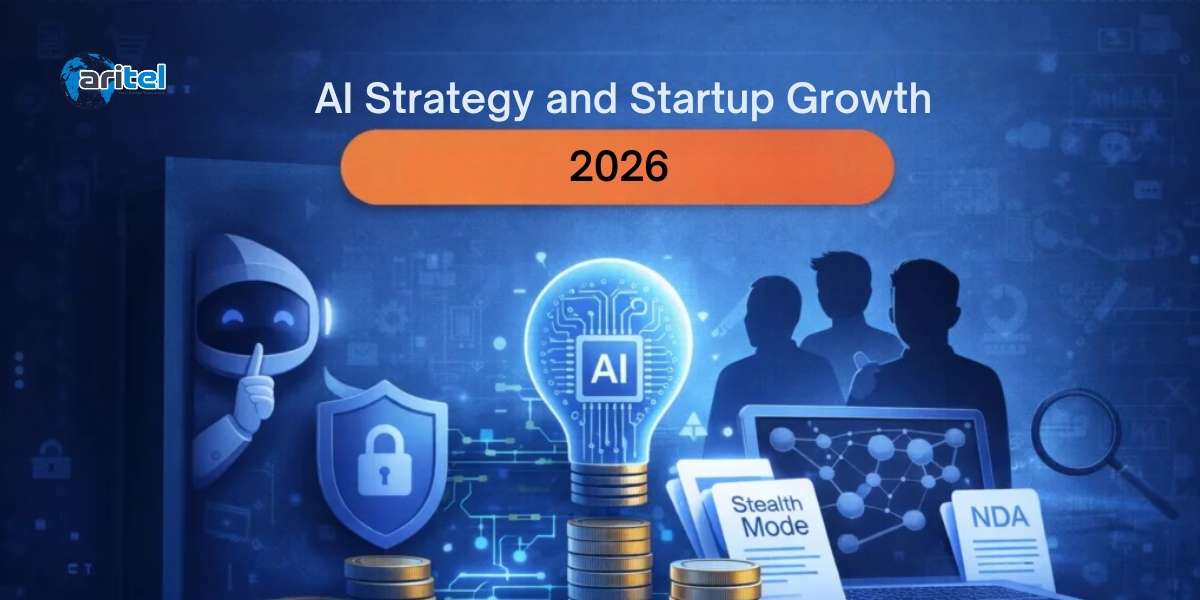
AI Strategy and Startup Growth in 2026: What Founders Must Know

In 2026, artificial intelligence isn’t just influencing the startup ecosystem — it is re-architecting it. AI has evolved from a tactical add-on into a strategic operating layer that determines how startups design products, optimise customer journeys, and scale with precision.

Founders are no longer debating whether to use AI. They are now evaluating how deeply AI should shape their product architecture, communication workflows, market intelligence, and operational decisions. This shift is not incremental. It cuts into the fundamentals of strategy — including data quality, organisational capability, network infrastructure, and communication systems. AI is now redefining who learns faster, who scales leaner, and who builds more resilient customer value.

This article explores how AI is reshaping startup strategy in 2026 — and how Aritel’s digital-first telecom solutions provide the underlying connectivity, unified communications, and infrastructure that intelligent businesses rely on.

Table of Contents

  • AI as a Strategic Operating System — Not an Add-On
  • Organisational Capability: Lean Teams Powered by AI
  • Growth Intelligence: From Funnels to Continuous Learning Loops
  • A Practical Framework for Strategic AI Integration
  • Risks & Strategic Guardrails
  • Looking Ahead: AI as a Competitive Differentiator

AI as a Strategic Operating System — Not an Add-On

Historically, startups used AI for surface-level optimisation — automating emails, improving ad targeting, or enhancing basic analytics. Today, AI functions as an organisation-wide intelligence layer, influencing every decision loop:

Product Design

  • Predictive models forecast which features drive retention.
  • AI identifies friction across the UX flow.
  • Dynamic UX generation adapts interfaces based on behaviour patterns.

Growth Mechanics

  • Instead of one-off campaigns, AI enables always-on growth loops.
  • Every user interaction contributes to the next strategic iteration.
  • Acquisition, retention, and monetisation become self-optimising.

Decision Systems

  • AI closes the gap between signal → insight → action.
  • Teams can make real-time strategic decisions driven by unified data.

This is where connectivity and communications matter. AI cannot operate effectively over fragmented systems. Businesses require:

  • High-speed full fibre broadband
  • Consistent mobile data connectivity
  • Integrated cloud communication systems

Aritel’s business broadband, 5G-ready mobile plans, and VoIP-based unified communications align perfectly with AI-driven operating structures.

Organisational Capability: Lean Teams Powered by AI

AI-driven teams operate differently:

  • Smaller headcounts
  • Higher strategic output
  • Cross-functional collaboration mediated by AI
  • Reduced manual workload due to intelligent automation

Startups now prioritise:

  • Data-literate generalists
  • Judgement-capable decision makers
  • Teams skilled at leveraging AI tools

For example, a fintech company automates fraud detection and credit scoring. Instead of 50 analysts, a 5-member team oversees:

  • Model performance
  • Regulatory compliance
  • Edge-case human judgment

This mirrors the efficiency startups achieve when they pair AI systems with the right communication and connectivity infrastructure, such as:

  • Cloud telephony
  • AI-enabled customer service routing

Aritel Limited already supports similar digital-native businesses across the UK with enterprise communication solutions.

Growth Intelligence: From Funnels to Continuous Learning Loops

Traditional funnels fail because they assume linearity. But customer behaviour is non-linear and volatile.

AI transforms growth into a closed learning loop:

  • Predicting churn
  • Suggesting retention interventions
  • Personalising communication
  • Adjusting product features in real-time
  • Identifying high-value user micro-segments

This depends heavily on scalable data flow, which in turn depends on stable connectivity, making the following key parts of the AI loop:

A Practical Framework for Strategic AI Integration

Stage 1: Discover

  • Define business outcomes (churn reduction, CAC, retention uplift).
  • Audit data sources and connectivity gaps.
  • Assess infrastructure readiness.

Stage 2: Design

  • Build use-cases tied to outcomes.
  • Prioritise by feasibility vs impact.
  • Architect communication and connectivity layers.

Stage 3: Deploy

Stage 4: Learn

  • Track insight velocity.
  • Make data-driven product and GTM decisions.

Stage 5: Loop

  • Institutionalise weekly learning cycles.
  • Use AI feedback to refine operations continuously.

Risks & Strategic Guardrails

AI adoption introduces extraordinary potential, but also significant structural risks when systems rely on poor data, weak networks, or ungoverned automation. Founders must recognise and mitigate these vulnerabilities early:

1) Data Quality Failures & Flawed Predictions

AI is only as reliable as the information feeding it. Incomplete, inconsistent, or siloed data leads to inaccurate forecasting, unreliable recommendations, and misleading insights. For early-stage companies, poor data hygiene can collapse product direction, distort customer segmentation, and derail go-to-market strategies.

2) Operational Over-Reliance

Many startups fall into the trap of allowing AI tools to make decisions faster than teams can validate them. Without proper human-in-the-loop oversight, AI outputs can turn into blind spots, creating brittle systems that break under unexpected conditions.

3) Regulatory & Compliance Exposure

AI-driven workflows increase exposure to:

  • GDPR violations
  • Improper data handling
  • Non-transparent model decisions
  • Communication system non-compliance

A single compliance failure can threaten funding, trust, and market access.

4) Model Bias & Security Challenges

AI systems can inherit bias, expose sensitive datasets, or become targets of cyberattacks such as model poisoning or prompt exploits. Startups must build defensive layers to ensure fairness, resilience, and protection from evolving threats.

5) Network Performance & Infrastructure Gaps

Many risks originate not from AI itself, but from the infrastructure running it. Unreliable bandwidth, insecure networks, and high-latency communication channels can cause:

  • delayed processing
  • failed data sync
  • corrupted insights
  • outages in automated systems

That is why secure, high-performance connectivity — from full fibre broadband to cloud-ready voice and network solutions — is essential to reducing AI-related risk.

Aritel Limited’s resilient network infrastructure, business-grade connectivity, and compliant communication systems create the stable foundation startups need to train, deploy, and scale AI safely.

Looking Ahead: AI as a Competitive Differentiator

The next generation of UK startups will not win because they use AI — they will win because they can operationalise AI better, faster, and more reliably than competitors. Companies that embed intelligent systems early consistently achieve:

  • Faster iteration cycles: Real-time data flow, automated insights, and continuous feedback enable teams to test, refine, and scale ideas faster than traditional product cycles.
  • Improved retention: AI-driven personalisation, behavioural modelling, and targeted communication increase customer lifetime value and reduce churn.
  • More accurate market pivots: Predictive models detect emerging patterns early, helping founders shift direction before market conditions change.
  • Leaner, more efficient teams: Automated workflows reduce manual load, allowing small teams to operate like scaled organisations.
  • Higher operational clarity: Continuous intelligence sharpens decision-making, aligning teams around measurable outcomes instead of assumptions.

But AI’s true strategic value only emerges when backed by strong digital foundations, such as:

  • Consistent uptime
  • Secure data pathways
  • Scalable cloud communication channels

This is exactly what Aritel Limited delivers. With enterprise-grade connectivity, cloud-optimised telecom solutions, and secure communication infrastructure, Aritel enables startups to transform AI from a tool into a long-term competitive advantage.

Conclusion: Strategy Redefined

AI is no longer a technical milestone — it is a strategic catalyst powering the next generation of business models. The startups that win in 2026 will be those that design AI into their operating rhythms, feedback loops, and decision systems from day one. But intelligent systems require intelligent foundations, such as:

  • Resilient connectivity
  • Seamless communication
  • Secure digital frameworks

If you’re a founder looking to embed AI strategically, the next step is to strengthen your infrastructure and competitive edge, and get started with Aritel Limited today.

Data-Driven Decisions: How Automation & AI Are Transforming Digital Marketing for UK Businesses

What if the biggest competitive advantage for UK businesses in 2026 isn’t faster internet, better software, or even AI—but the ability to uncover insights hidden in the data they already own?

Every click, transaction, sensor reading, and customer interaction generates valuable signals, yet most organisations only scratch the surface of what this information can reveal. With connected devices expanding at an unprecedented pace and cloud ecosystems becoming the operational backbone of nearly every industry, companies now face a new challenge: how to transform overwhelming volumes of raw data into clear, strategic action.

Table of Contents

  • The Silent Revolution: How Automated Data Mining Is Redefining Business Analytics in the UK
  • Why Automated Data Mining Matters More Than Ever
  • The Role of IoT and Automation in Modern Data Mining
  • How Are UK Businesses Using Automated Data Mining Today
  • Why Data Quality Is the New Competitive Advantage
  • The Future: AI-Led Business Analytics and the Next Wave of Automation

The Silent Revolution: How Automated Data Mining Is Redefining Business Analytics in the UK

Today, UK businesses generate more data than at any point in history—far beyond what traditional reporting tools can interpret. With connected devices multiplying, cloud-based ecosystems expanding, and customer interactions moving fully online, organisations now face a new challenge: how to convert massive, unstructured datasets into real business value.

This is where automated data mining for business analytics is quietly reshaping the competitive landscape. It’s not just another digital trend—it’s the backbone of how modern companies optimise operations, uncover new revenue opportunities, and deliver better customer experiences across telecoms, retail, finance, technology, and beyond.

Why Automated Data Mining Matters More Than Ever?

The UK has witnessed a dramatic shift towards data-driven operations, with reports showing:

  • 90% of the world’s data was created in the last two years, driven primarily by IoT and connected systems.
  • UK organisations now use an average of 73 different data sources for strategic decision-making.
  • Businesses adopting automated analytics report significantly faster decision-making, with many achieving real-time or near-real-time insights compared with traditional manual reporting.

As data complexity rises, manual analytics simply can’t keep up. Automated data mining fills this gap by:

  • Rapidly scanning thousands of data points
  • Detecting anomalies in real time
  • Identifying hidden relationships and behaviours
  • Reducing human error
  • Supporting predictive modelling and forecasting

This shift is transforming how UK companies operate—from how telecom providers manage network performance to how finance teams assess customer risk & how digital marketing agencies target high-intent audiences.

The Role of IoT and Automation in Modern Data Mining

IoT has become a major catalyst in the analytics revolution. With an estimated 50 billion IoT devices expected globally by 2035, UK businesses are increasingly integrating sensors, smart meters, connected vehicles, and automated retail systems into daily operations. This influx of machine-generated data has three major effects:

   1. Higher Data Accuracy

IoT removes guesswork. Automated logs provide precise, time-stamped insights—vital for industries like:

  • Logistics
  • Utilities
  • Telecoms

   2. Predictive Capabilities

Sensors allow organisations to predict failures before they happen, which results in:

  • Reduced outages
  • Improved service delivery
  • Lower maintenance costs

  3. Real-Time Decision Making

Automated analytics tools can detect the following issues instantly:

  • Network congestion
  • Fraud patterns
  • Operational bottlenecks

This is something manual analysis cannot achieve. As the volume of device-to-device communication increases, data mining becomes not just beneficial but essential.

How Are UK Businesses Using Automated Data Mining Today?

Organisations across the UK are applying advanced analytics in surprisingly transformative ways:

Telecommunications

  • Predicting network traffic spikes
  • Analysing customer churn signals
  • Improving QoS (Quality of Service) across fibre and mobile networks

Digital Marketing & Web Development

  • Identifying high-performing user journeys
  • Automating campaign optimisation
  • Detecting fraudulent clicks and abnormal ad behaviour

Debt Advisory & Financial Management

  • Predicting repayment behaviours
  • Identifying early indicators of financial distress
  • Enhancing approval and underwriting processes

Retail & eCommerce

  • Personalising product recommendations
  • Tracking real-time customer behaviour
  • Forecasting inventory demand with up to 85% accuracy

These use cases all share one common thread: automation reduces complexity and unlocks insights that were previously inaccessible.

Why Data Quality Is the New Competitive Advantage?

Even the most advanced analytics system fails without high-quality data. Research published in 2025 found that:

  • 94 % of organisations say poor-quality data impacts their operations and leads to wasted resources and additional costs (e.g., time, inefficiency).
  • Only 27% of organisations trust the integrity of their own customer data.

This is where automated data mining delivers a critical advantage:

  • It removes duplicate and incomplete records
  • It standardises formatting
  • It identifies “silent gaps” in processes
  • It enriches existing datasets with machine learning

Businesses that prioritise clean, structured, real-time data are better positioned to scale efficiently—especially those operating in competitive sectors like telecoms, digital marketing, and financial services.

The Future: AI-Led Business Analytics and the Next Wave of Automation

The next evolution of data mining will be shaped by generative AI, autonomous systems, and real-time analytics.

Here’s what UK businesses can expect:

  • AI-Driven Forecasting: Predictive insights that map customer behaviour, financial risk, operational efficiency, and emerging opportunities more accurately than ever.
  • Hyper-Automated Analytics Pipelines: End-to-end workflows—from ingestion to modelling—powered entirely by automation.
  • Self-Optimising Networks & Systems: Especially relevant for telecom providers, where automated signals determine routing, bandwidth distribution, and service allocation.
  • Privacy-Centred Data Intelligence: A growing emphasis on encryption, compliance, and ethical data mining under UK GDPR frameworks.

Businesses that adopt these advancements early will gain a measurable edge in agility, customer understanding, and operational control.

Conclusion

Automated data mining is no longer a technical luxury—it’s a business necessity in an economy driven by real-time decision making, intense competition, and digital-first customer expectations. Whether your organisation is navigating telecom complexities, building intelligent digital experiences, enhancing financial assessments, or strengthening marketing performance, the ability to turn raw information into actionable insight will define your growth trajectory.

Aritel Limited supports businesses by delivering the technology, analytics frameworks, and digital systems needed to make that transformation seamless, strategic, and scalable. If your organisation is ready to build a smarter, data-driven future, we are here to help you take the next step.

Invisible Networks: How IoT-Driven Automation Is Changing UK Business Communications

In the UK’s rapidly evolving business landscape, infrastructure is becoming invisible. It no longer begins and ends with wires, landlines, or a single office — nor is it defined solely by speed. Instead, business communications are now shaped by small decisions happening thousands of times a day: an app signalling stock levels, a sensor detecting equipment wear, a mobile team coordinating repairs, or a VoIP call routing a customer complaint.

This shift — powered by IoT (Internet of Things) and automation — has quietly transformed every organisation that uses data, devices, and networks to make real-time decisions. With this transformation, the expectations placed on networks have undergone a radical change.

Where once legacy fixed lines sufficed, today’s organisations demand the UK’s telecommunications infrastructure that supports distributed systems, continuous data flows and resilient communication paths. In this article, we examine how IoT-driven automation is transforming business communications, its implications for UK businesses, and how modern connectivity is shaping this new operational landscape.

Table of Contents

  • What Makes a Network “Invisible”
  • Why IoT Means Business Communications Must Evolve
  • The Emerging Role of IoT in Communications
  • Automation Demands Higher Network Expectations
  • How Modern UK Networks Support Automation
  • VoIP and Internet Phone Systems: Automation in Communications
  • Combining Data, Devices, and Decisions
  • Practical Challenges in IoT Automation

What Makes a Network “Invisible”?

Traditionally, networks were visible, physical, and centralised:

  • Desk phones plugged into wall sockets
  • Landlines dedicated to voice
  • On-site servers handling core applications
  • Copper broadband supplying internet

Today, automation and IoT devices have distributed these functions across wide areas & platforms:

  • Wireless sensors in warehouses and stores
  • Mobile devices for field teams
  • Cloud-based applications accessible anywhere
  • Automated triggers that operate without human input

Rather than asking “Does the network work?”, businesses now ask “Can it support automated decisions in real time?” This is the essence of invisible networking — it is no longer about local infrastructure but about fluid, resilient, autonomous connectivity.

Why IoT Means Business Communications Must Evolve?

The rise of Internet of Things (IoT) technologies is no longer a futuristic prediction — it is happening now across UK industries:

  • Retail and logistics use RFID and environmental sensors
  • Manufacturers gather real-time assembly and machine data
  • Healthcare facilities monitor assets and patient locations
  • Service providers automate scheduling and resource allocation

These systems generate continuous streams of data. If networks cannot keep up, automations stall, alerts are delayed, and decisions are compromised. A 2025 Connected Nations analysis showed that UK mobile data usage has expanded significantly year-on-year. Full-fibre availability now exceeds 79% of premises, reflecting how organisations expect robust, always-on access as the default.

The Emerging Role of IoT in Communications

In many organisations, IoT systems are not stand-alone; they are integrated into communication workflows:

  • A sensor could trigger a VoIP call to a support agent
  • Data anomalies could send SMS or app notifications to mobile workers
  • Temperature alerts could initiate automated emails or system actions
  • Inventory counts could auto-update CRM & ERP systems

Even voice communication is moving toward automation:

  • Smart call routing based on real-time data
  • Voice assistants integrating with CRM and order systems
  • Customer notifications triggered by system events

For businesses that still rely on legacy voice or isolated broadband connections, these automated patterns become a limiting factor — not just an inconvenience.

Automation Demands Higher Network Expectations

Conventional fixed network setups were designed for predictable, centralised communication: office desks, dedicated telephone numbers, and human-initiated calls.

By contrast, IoT-driven automation requires:

  • Always-on connectivity: Devices call systems autonomously — not on human schedules.
  • Low latency: Delays impact real-time decision making, especially in logistics, retail and safety-critical environments.
  • High bandwidth and resilience: Multiple devices, simultaneous connections and data streams strain older networks.
  • Distribution over broad areas: IoT is effective only if networks extend to all operational spaces — from warehouses to vehicles, remote sites and retail floors.

How Modern UK Networks Support Automation?

Two technologies are now central to this shift:

1) Fibre Optic Internet & FTTP Broadband UK

Full-fibre (FTTP) delivers consistent, high-capacity connectivity with minimal latency, making it ideal for:

  • Large data transfers
  • Cloud-hosted apps
  • Voice, video and voice-data integration
  • Autonomous system coordination

FTTP broadband is now widely adopted across the UK, enabling businesses to rely on broadband as the backbone of operations rather than a stopgap.

2) 5G and Business Mobile Solutions

Mobile networks complement fibre by offering:

  • Flexible coverage for remote or temporary sites
  • Backup connectivity when fibre is unavailable
  • Support for mobile IoT endpoints
  • Reduced dependency on physical infrastructure

According to research, UK mobile networks cover over 96% of populated areas with 4G, and 5G availability continues to expand rapidly. This means organisations can support automation even outside traditional offices.

VoIP and Internet Phone Systems: Automation in Communications

Internet phone systems and VoIP services for business are increasingly designed to integrate with broader automation platforms:

  • Automated call triggers from system events
  • Scalable call flows linked to data alerts
  • Remote workforce support via cloud telephony
  • Lower cost per communication relative to legacy lines

These systems reduce human intervention in routine communications, enabling proactive responses and faster resolution cycles.

Combining Data, Devices, and Decisions

The true power of IoT is not in isolated data — it’s in connected workflows:

  • A logistics manager receives automated routing updates
  • A retail system triggers stock replenishment alerts
  • A field technician gets predictive maintenance schedules
  • A customer support team sees system health indicators

In each case, the network is not a backdrop — it is a strategic enabler. For many UK SMEs, this means rethinking how connectivity is planned, provisioned and managed.

Practical Challenges in IoT Automation

While IoT promises efficiency, businesses should be aware of common pitfalls:

  • Connectivity Gaps: If devices cannot reliably reach the network, automation fails.
  • Latency and Jitter: Even small delays can disrupt real-time workflows.
  • Security Considerations: IoT systems expand the attack surface, demanding strong monitoring and encryption.
  • Integration Complexity: Connecting legacy systems with modern cloud apps and voice tools can require careful planning.

These challenges are not barriers — they are design considerations for modern business networking.

The Future of Business Communications

As UK businesses continue to adopt IoT and automation, the role of telecom infrastructure will only grow more strategic. From factory floors to frontline field teams, invisible networks are becoming the backbone of operational agility.

The shift is evident not because of hype, but because organisations that embrace automation and connectivity consistently:

  • Improve responsiveness
  • Reduce manual intervention
  • Scale operations without proportional cost rises
  • Support hybrid work models seamlessly

Conclusion

Invisible networks — those that work reliably without attention — are becoming essential to modern business communications. IoT-driven automation depends on robust business telecommunications, including:

  • Fibre optic internet
  • Mobile connectivity
  • VoIP
  • Cloud phone platforms

For organisations assessing their next connectivity strategy, the focus should be on systems that:

  • Enable automation
  • Support data flows
  • Enhance operational predictability

When you’re ready to explore how resilient, automation-friendly networks can support your organisation’s growth and communication needs, providers like Aritel Limited, with expertise in business internet, cloud phone service and telecom services, can guide the transition with confidence.

From Fixed Lines to Fluid Networks: The Role of 5G and Full-Fibre in Modern UK Operations

For decades, UK businesses were built around fixed infrastructure. Desk phones, copper broadband connections, and on-site systems changed the way organisations communicated, traded, and operated their businesses. That model is now slowly being replaced by something much more flexible.

Across retail, logistics, professional services, healthcare, and manufacturing, operations are becoming:

  • Location-agnostic
  • Data-driven
  • Increasingly automated

The networks supporting them must adapt accordingly. This is where full-fibre broadband and 5G connectivity are changing not just speed, but the structure of modern UK operations. Rather than replacing one technology with another, many organisations are now building fluid networks — connectivity models that combine fibre, mobile, cloud, and automation to support how work actually happens today.

Table of Contents

  • Why Fixed Networks No Longer Match Modern Operations
  • Full-Fibre as the Backbone of Digital Operations
  • The Expanding Role of 5G in Business Connectivity
  • From Redundancy to Resilience: Why Hybrid Networks Matter
  • Cloud Telephony and the Decline of Fixed Phone Lines
  • Automation and IoT: Why Network Design Now Matters More
  • Cost Control in a Converged Connectivity Model
  • Security and Compliance in Modern Networks

Why Fixed Networks No Longer Match Modern Operations?

Traditional fixed-line connectivity was designed for predictable, centralised environments. Today’s operations look very different. UK businesses increasingly rely on:

  • Distributed teams and hybrid working
  • Cloud-based platforms rather than on-premise systems
  • Real-time data from multiple locations
  • Mobile workflows rather than desk-bound processes

According to Ofcom, data usage on mobile networks has more than tripled over the past five years, while demand for business-grade fibre has accelerated as cloud adoption becomes standard. Fixed copper lines, originally designed for voice, struggle to meet these requirements reliably. This shift is not about abandoning fixed infrastructure altogether — it is about removing dependence on a single point of connectivity.

Full-Fibre as the Backbone of Digital Operations

Full-fibre (FTTP) broadband provides the stability & capacity modern businesses require for core systems. Unlike copper-based services, fibre delivers consistent performance regardless of distance or demand peaks.

In the UK, FTTP broadband availability now exceeds 79% of premises, driven by national rollout programmes and private investment. For businesses, this has unlocked new operational possibilities.

What Full-Fibre Enables

  • Reliable access to cloud platforms & SaaS tools
  • High-quality VoIP phone systems for business use
  • Stable connectivity for data-heavy applications
  • Scalable bandwidth as operations grow

For many organisations, fibre now forms the primary connection supporting finance systems, customer platforms, inventory tools, and internal communications. However, fibre alone does not address every operational risk — particularly where mobility, resilience, or rapid deployment are required.

The Expanding Role of 5G in Business Connectivity

5G is often discussed in terms of speed, but its real value for UK businesses lies in flexibility & resilience. With improved latency, capacity, and coverage, 5G is increasingly used alongside fibre rather than as a replacement.

Practical Business Uses of 5G

  • Backup connectivity during fibre outages
  • Temporary or mobile site operations
  • Supporting field-based teams and remote assets
  • Enabling IoT-enabled monitoring and automation

UK mobile networks now cover over 96% of populated areas with 4G, with 5G coverage expanding rapidly across cities, transport hubs, and industrial zones. For businesses, this means mobile connectivity is no longer a compromise — it is part of the core infrastructure.

This shift has made business mobile solutions an operational necessity rather than a convenience.

From Redundancy to Resilience: Why Hybrid Networks Matter

Rather than choosing between fibre or mobile, many organisations are adopting hybrid connectivity models. A fluid network typically combines:

  • Full-fibre broadband for primary operations
  • 4G or 5G connectivity for backup and mobility
  • Cloud-based phone systems instead of fixed PBX
  • Centralised management across locations

This approach reduces downtime risk and enables businesses to continue operating even when a single connection fails. For sectors such as retail, healthcare, and logistics, where downtime directly affects revenue or safety, resilience has become a strategic priority.

Cloud Telephony and the Decline of Fixed Phone Lines

As networks evolve, voice services are evolving with them. Fixed analogue lines and on-site PBX telephone systems are increasingly replaced by cloud based phone systems for small businesses and enterprise environments alike.

Modern internet phone systems operate entirely over IP networks, allowing voice to move seamlessly between devices and locations.

Benefits of Cloud-Based Phone Systems

  • No dependency on physical phone lines
  • Consistent service across offices and remote staff
  • Easier scaling without infrastructure upgrades
  • Integration with CRM and collaboration tools

As the UK continues its transition away from legacy voice services, cloud telephony aligns naturally with fibre & mobile-first connectivity strategies.

Automation and IoT: Why Network Design Now Matters More

Connectivity is no longer just about access — it underpins automation and intelligent systems. Across UK industries, connected devices are being used to:

  • Monitor energy usage and equipment health
  • Automate inventory and supply chain processes
  • Improve customer experience through real-time data
  • Support predictive maintenance and analytics

These applications rely on consistent, low-latency networks. Fibre provides the throughput, while 5G enables deployment where wiring is impractical or too slow.

The rise of IoT means businesses must think beyond “internet access” and consider how data flows across sites, devices, and platforms in real time.

Cost Control in a Converged Connectivity Model

While advanced networks may sound expensive, fluid connectivity models can actually reduce long-term costs. Businesses that consolidate voice and data services, fixed and mobile connectivity, and multiple suppliers into fewer platforms often see lower operational overheads & simpler management.

Rather than maintaining separate contracts for broadband, telephony, and mobile, organisations increasingly look for business internet and phone solutions that work together. This reduces duplication, simplifies billing, and improves visibility over usage.

Security and Compliance in Modern Networks

As connectivity expands, so does the need for robust security. Modern fibre and mobile networks support:

  • Encrypted data transmission
  • Centralised monitoring and access control
  • Faster deployment of security updates
  • Improved resilience against service disruption

For UK businesses handling customer data or payment information, network design now plays a direct role in GDPR compliance and operational risk management. Legacy systems often lack the flexibility to adapt to evolving security standards, reinforcing the case for modern, IP-based infrastructure.

Final Thoughts

The move from fixed lines to fluid networks is not a trend — it reflects how businesses now operate. Organisations that adapt early benefit from:

  • Greater operational flexibility
  • Reduced downtime risk
  • Better support for automation and growth
  • Infrastructure that scales with demand

Those who delay often find themselves constrained by systems designed for a very different business environment.

The future of UK business connectivity is not defined by a single technology. It is shaped by how fibre, mobile networks, cloud platforms, and automation work together. From full-fibre broadband supporting core systems to 5G enabling mobility and resilience, fluid networks are becoming the foundation of modern operations. For organisations reviewing their connectivity strategy, the focus should move beyond speed and cost alone. It should be towards adaptability, reliability, and long-term suitability.

When the time comes to assess options or plan a transition, providers like Aritel Limited support UK businesses with connectivity solutions designed for modern operational demands — helping organisations move forward with confidence, not disruption.

Debt in the UK Today: How Individuals and Businesses Can Make Informed, Sustainable Decisions

Debt has become an unavoidable reality for many individuals & businesses across the UK.   Rising operating costs, higher interest rates, and ongoing economic uncertainty have changed how people borrow, repay, and plan for the future. For some, debt is manageable. For others, it gradually becomes difficult to control — not because of poor decisions, but because circumstances change.

When debt begins to feel overwhelming, the most important step is not panic or avoidance, but understanding. Knowing where you stand financially, what options exist, and what consequences each route carries can make a meaningful difference to long-term outcomes.

This is where structured debt management advice plays a role — not as a promise of instant relief, but as a way to help individuals & businesses make informed, realistic decisions.

Table of Contents

  • The Changing Nature of Debt Pressure in the UK
  • What Debt Management Actually Means
  • Why Professional Debt Management Advice Matters
  • Aritel’s Role in Supporting Debt Management Decisions
  • How to Support Long-Term Financial Stability

The Changing Nature of Debt Pressure in the UK

In recent years, both households & businesses have faced increased financial pressure. Higher borrowing costs/tighter lending conditions/reduced margins have contributed to a steady rise in debt-related enquiries across the UK.

For businesses, cash flow challenges often stem from:

  • Delayed payments
  • Increased overheads
  • Reduced demand

For individuals, unsecured debts such as credit cards, overdrafts, and personal loans are frequently the source of concern. In both cases, the issue is rarely a single missed payment — it is the accumulation of pressure over time.

Debt problems tend to escalate quietly. Interest and charges compound, communication from creditors increases, and financial confidence declines. Without clear guidance, people often delay seeking advice until options become more limited.

What Debt Management Actually Means?

Debt management is often misunderstood. It is not a single product or solution, and it does not always involve formal insolvency. At its core, debt management is a structured process that helps people:

  • Understand their total debt position
  • Assess affordability realistically
  • Explore appropriate repayment or relief options
  • Communicate effectively with creditors
  • Plan for financial stability, not short-term fixes

A qualified debt adviser in the UK does not “sell” a solution. Their role is to explain available debt solutions clearly, outline the implications of each, and help clients decide what is suitable for their individual circumstances.

Why Professional Debt Management Advice Matters?

Many people attempt to manage debt alone, often relying on incomplete information or assumptions. This can lead to decisions that feel helpful in the short term but create difficulties later.

Professional debt management advice provides clarity at a point where confusion is common. Advisers help separate myths from facts, explain legal and financial responsibilities, and ensure individuals and businesses understand both their rights and obligations.

Importantly, regulated advice ensures that options such as insolvency voluntary arrangements, Debt Relief Orders, or bankruptcy are discussed responsibly — with full transparency around risks, credit impact, and long-term consequences.

Aritel’s Role in Supporting Debt Management Decisions

Aritel provides debt management advisory services in the UK, supporting both individuals and businesses who need clear, practical guidance. The emphasis is on understanding first, solutions second.

Rather than applying a fixed framework, Aritel’s advisers take time to understand each client’s situation before discussing possible routes forward.

Step 1: Initial Conversation and Context Building

The first step in any debt management journey is a confidential discussion. This allows advisers to understand income, expenditure, outstanding debts, and any immediate pressures.

For many clients, this stage alone provides relief. Simply laying out the facts — without judgement — often brings clarity and reduces anxiety. It also ensures that any guidance given later is grounded in reality rather than assumptions.

Step 2: Detailed Financial Assessment

Following the initial conversation, a more detailed financial assessment is carried out. This includes:

  • Total unsecured debt
  • Monthly income and essential living costs
  • Existing repayment commitments
  • Employment or business stability
  • Assets and liabilities

This step is essential, as without an accurate financial picture, no debt management advice can be responsible or effective.

Step 3: Exploring Available Debt Solutions in the UK

Once a financial assessment is complete, advisers can explain which debt solutions may be relevant. These may include informal arrangements or formal insolvency options, depending on circumstances.

Debt Management Plans (DMPs)

A Debt Management Plan is an informal arrangement where reduced monthly payments are made based on affordability. Creditors may agree to freeze interest or charges, although this is not guaranteed.

DMPs are often suitable for individuals who can repay their debts over time but need flexibility and breathing space.

IVA Debt Management (Individual Voluntary Arrangements)

An IVA is a formal, legally binding agreement typically lasting five to six years. It is designed for individuals with regular income who can commit to fixed monthly payments.

IVAs are administered by licensed insolvency practitioners & can result in some debt being written off at the end of the arrangement, provided all terms are met.

Debt Relief Orders (DROs)

Debt Relief Orders are intended for people with:

  • Low income
  • Minimal assets
  • Debts below a set threshold

A DRO pauses eligible debts for a fixed period, after which they may be written off if circumstances do not improve. Not everyone qualifies, and advisers ensure eligibility is assessed carefully before any application is discussed.

Trust Deeds

For individuals based in Scotland, Trust Deeds offer a formal debt solution similar in principle to an IVA. They allow:

  • Debts to be repaid over an agreed period
  • Remaining balances to be potentially written off

Bankruptcy Guidance

Bankruptcy is usually considered a last resort. While it can clear unsecured debts, it carries serious implications for:

  • Credit
  • Assets
  • Professional status

Advisers explain these consequences clearly so that decisions are informed rather than rushed.

Step 4: Review, Understanding, and Next Steps

Before any plan moves forward, advisers ensure that clients fully understand what has been discussed. This includes explaining:

  • Ongoing responsibilities
  • Potential risks
  • How different choices may affect future finances

Where necessary, clients are signposted to regulated insolvency practitioners or relevant authorities, ensuring compliance with UK regulations.

Supporting Long-Term Financial Stability

Effective debt management solutions are not only about addressing current balances. It is about:

  • Creating sustainable habits
  • Improving financial awareness
  • Reducing the likelihood of future difficulties

For businesses, this may involve:

  • Better cash flow planning
  • Realistic forecasting

For individuals, it often includes:

  • Budgeting support
  • Education around credit use

Aritel’s approach focuses on stability rather than short-term relief, recognising that long-term outcomes matter more than quick fixes.

Final Thoughts

Debt challenges are increasingly common across the UK. Still, they do not have to define the future of an individual or a business. With clear information, responsible advice, and realistic planning, it is possible to:

  • Regain control
  • Move forward with confidence

Aritel Limited’s debt management services exist to support informed decision-making — not to pressure, promise, or oversimplify. By helping clients understand their options fully, Aritel supports practical, sustainable financial outcomes.

Beyond Speed: Why 2026 Will Be the Year UK Businesses Shift to All-IP Connectivity

The UK’s move towards an all-IP future is no longer a distant milestone — it’s now a strategic priority for businesses preparing for the 2025 PSTN switch-off and the wider shift to digital-first operations. By 2026, most organisations will be running voice, data, payments, and customer communications over IP networks rather than legacy copper lines.

This shift isn’t happening because technology is becoming “flashier”. It’s happening because small and mid-sized businesses can no longer operate efficiently on ageing fixed-line infrastructure — especially as retail, e-commerce, hospitality, field services, and hybrid workplaces depend heavily on reliable connectivity.

With VoIP phone systems for businesses, fibre broadband, and mobile-first tools accelerating across the UK, companies that prepare early will see smoother operations, lower communication costs, and greater resilience than those waiting until the final months of the transition.

This is where Aritel’s telecom and digital solutions stand out.

Table of Contents

  • The UK’s Copper Networks Are Reaching End-of-Life
  • Market Data Shows the Decline of Fixed Voice
  • Why 2026 Will Be the “All-IP Normal”
  • How Does Aritel Support the Transition to All-IP Connectivity Seamlessly
  • What Does The Industry Transition Mean for UK Retailers, Small Businesses, & Service Providers

The UK’s Copper Networks Are Reaching End-of-Life

The traditional Public Switched Telephone Network (PSTN) is scheduled for withdrawal across the UK by 2025 or 2026 — a confirmed nationwide transition supported by industry-wide announcements and regulatory updates from Ofcom.

This change affects every organisation that still depends on copper-based services, including:

  • Traditional landline telephony
  • Analogue and on-premise PBX telephone systems
  • Fax machines
  • Lift/emergency lines and alarm signalling
  • ADSL/FTTC broadband delivered over copper
  • Payment terminals and EPOS setups that route transactions via PSTN
  • Legacy card machines using dial-up connectivity

Even without the formal withdrawal, it has become increasingly clear that copper networks can no longer meet the performance, resilience, or digital needs of modern UK businesses — making the shift to all-IP services both inevitable and beneficial.

Market Data Shows the Decline of Fixed Voice

Verified telecoms data tells a consistent story. Fixed-line usage is declining sharply as digital alternatives continue to gain traction.

In Q2 2025, fixed voice revenues dropped by 14.1% year-on-year to £1.04 billion as users moved to digital alternatives. This shift hits retailers particularly hard because they rely on customer-facing voice services. As consumers and staff transition to IP-based platforms, legacy systems are unable to support modern communication patterns.

Why 2026 Will Be the “All-IP Normal”?

Several converging trends are making 2026 the turning point for UK businesses:

  • Fibre Coverage Growth

The UK Government’s Project Gigabit and provider rollouts continue to accelerate FTTP coverage. As of 2025, full-fibre availability has passed 79% of UK premises. By 2026, most business postcodes — including high streets and industrial estates — will have an FTTP option.

  • VoIP Adoption Increasing

VoIP adoption among UK SMEs continues to grow due to reduced expenses and remote-friendly features that support remote work. The increasing dependence on cloud-based applications & hybrid arrangements has prompted businesses to replace older phone setups for more flexible, IP-based alternatives. With more services moving online now, SMEs are placing importance on telephone systems that integrate seamlessly with:

  • Collaboration tools
  • CRM platforms
  • Mobile devices


  • AI and Automation Tools Require Stable IP Networks

Retailers, healthcare providers, educators, and service industries are all utilising analytics, automation, and digital processes that require fast and dependable internet connections. These tools cannot run effectively on PSTN-based systems. As AI-driven operations become mainstream, businesses need networks that support real-time data processing — a capability that legacy copper lines were never designed to handle.

  • Mobile Networks Are Now Core to Business Continuity

With 4G/5G reliability improving, SIM-based backup connectivity is quickly becoming standard. This convergence makes 2026 the year when IP becomes the default — not an upgrade. Many SMEs now pair fibre with 4G/5G failover to avoid downtime, making mobile-first resilience a fundamental part of modern connectivity planning.

How Does Aritel Support the Transition to All-IP Connectivity Seamlessly?

Aritel is positioned uniquely for UK SMEs. Its offering encompasses business fibre, VoIP, mobile solutions, and digital tools under one provider, thereby reducing fragmentation & improving reliability.

Here’s how:

  • Fibre Broadband for High-Demand Workflows

Aritel, through We Voice, delivers full-fibre broadband suitable for:

  • POS systems
  • Cloud apps
  • Analytics
  • CCTV
  • Multi-site operations

Benefits include:

  • Symmetric, stable speeds
  • Low latency for payments and VoIP
  • Reliable performance during peak hours
  • Better support for cloud-based systems


  • Cloud Phone Systems Built for an All-IP Era

Aritel’s cloud based phone systems replace legacy PBX without disruption, enabling:

  • VoIP lines compliant with post-PSTN standards
  • Call routing, IVR, & voicemail-to-email
  • Unified communication across devices
  • Scalability for growing teams
  • Integration with analytics & AI tools


  • Business Mobile Solutions That Keep Teams Connected

Aritel’s Vodafone/O2-backed plans reduce downtime with:

  • Strong UK-wide network coverage
  • Unlimited and high-data SIM-only deals
  • Mobile-first business communication
  • Automatic fallback options

These ensure operational continuity during fibre faults or local outages — a crucial differentiator in all-IP environments.

  • Digital Solutions to Support Growth

Beyond telecoms, Aritel also provides digital development services, including:

  • Web solutions
  • E-commerce development
  • Custom applications

This aligns with the rising demand for integrated digital tools across UK businesses, enabling end-to-end business modernisation.

What Does The Industry Transition Mean for UK Retailers, Small Businesses, & Service Providers?

An all-IP environment gives organisations a foundation that is faster, more resilient, and future-proof by design. Key advantages include:

  • More Reliable Communications

Voice and data networks leveraging IP technology substantially reduce interruptions and call performance problems, thereby ensuring smoother day-to-day operations. Businesses can expect:

  • Fewer dropped calls and less interference compared to legacy copper lines.
  • Capability to handle numerous concurrent connections, promoting smooth collaboration across teams.
  • Enhanced consistency for remote and hybrid working setups, keeping staff connected wherever they are.
  • Lower Overall Connectivity Costs

Consolidating voice & data into a single infrastructure can reduce costs & simplify management & administration. Key advantages include:

  • Elimination of separate landline and broadband subscriptions.
  • Lower IT maintenance costs by managing voice & data under one provider.
  • Reduced investment in legacy hardware, saving both upfront & ongoing expenses.
  • Better Performance for Cloud Systems

All IP-based networks offer ample data capacity & minimal delay connections, which are essential for cloud services to function optimally. Benefits include:

  • Smooth video conferencing/cloud POS/real-time collaboration even during peak hours.
  • Efficient handling of data-heavy applications like inventory management & analytics.
  • Faster access to cloud-hosted CRMs/booking platforms improves operational efficiency.


  • Faster Customer Response Times

With VoIP, mobile backup, and intelligent routing, businesses can respond to customers quickly — in-store/online/remotely. This enables:

  • Automated call routing to ensure queries reach the right department or agent.
  • Reduced response times for online & voice-based customer support.
  • Enhanced service continuity even during busy periods or network interruptions.


  • Secure, Compliant Infrastructure

IP networks support modern security protocols & compliance measures that legacy systems cannot match. Benefits include:

  • Stronger encryption & automated updates to reduce cyber risk.
  • Centralised data monitoring to maintain GDPR compliance.
  • Enhanced protection for payments, customer records, and sensitive internal communications.


  • Tools Ready for AI and Automation

The stability of all-IP connectivity allows businesses to harness AI and automation effectively. This provides:

  • Support for predictive analytics to optimise inventory, staffing, and marketing decisions.
  • AI-driven customer service tools, including virtual assistants, automated alerts, and workflow automation.
  • Integration with collaboration platforms and cloud-based tools for smarter, more efficient operations.

In short, running any operation on copper networks will no longer be sustainable in 2026, either technically or commercially. Migration isn’t just an upgrade — it’s a requirement for staying competitive.

Final Thoughts

The shift to all-IP connectivity is not just a technical upgrade—it’s a structural change in how UK businesses will operate from 2026 onwards. With the PSTN switch-off approaching, rising digital service adoption, and fibre coverage accelerating, organisations that move early will gain the clearest advantage.

Whether you’re searching for fibre internet in your area, small business phone solutions, or a cloud phone service for UK businesses, Aritel provides the tools and support needed for a smooth, future-ready transition.

Prepare now — and let Aritel Limited guide you into the all-IP future with confidence.

How AI-Enhanced Fibre & VoIP Power Smarter UK Stores Amid the PSTN Deadline?

As 2025 approaches, the UK’s retail industry is set to reach a turning point in its digital evolution. Given the postponement of the Public Switched Telephone Network (PSTN) shutdown until January 2027, companies now have an additional year to transition away from older copper infrastructure to internet-based VoIP. This extension takes care of worries about users who are vulnerable and businesses that aren’t prepared. It builds pressure on retailers to adopt resilient, future-proof telecom setups. However, it doesn’t diminish the urgency. Over 93% of UK retail and wholesale firms still rely on PSTN for critical tools, such as EPOS terminals and alarms, risking disruptions if they delay.

As 2025 gets closer, the UK’s retail industry is about to make a big change in its digital transformation. The Public Switched Telephone Network (PSTN) switch-off has been pushed back to January 2027. This gives businesses an extra year to move from old copper lines to internet-based VoIP. This extension resolves worries regarding users in vulnerable situations and organisations that are not yet ready.

Broadband access via fibre optics, including both complete fibre connections and those reaching the street cabinet, now represents the dominant share at 77.2% among the UK’s 29.2 million fixed broadband plans, up from 76.4% in the prior quarter. It’s not only about speed for retailers. For those in the retail sector, this development signifies more than just faster data rates—it pertains to integrating AI for forecasting stock needs, tailoring customer engagement, and achieving smooth, unified experiences across all sales channels. Yet, studies reveal that 94% of SMEs have internet access, but only 73% bundle it with VoIP, missing out on 30-40% in cost savings and enhanced efficiency.

Aritel, as an independent UK telecom service provider partnering with Vodafone and O2, excels here with its no-fuss, affordable bundles of fibre internet, SIM-only deals, and cloud-based small business phone solutions. Our USP is straightforward migrations with 24/7 UK support, transparent pricing, and scalability for growing shops—without the lock-ins or complexity of bigger players. This approach aligns perfectly with retail’s push for “smart stores”, where AI thrives on reliable connectivity. In fact, it is projected that the UK VoIP market will reach £55 billion by year-end, with 31% of businesses already switched to its AI-ready features, such as automated call routing.

This isn’t about sweeping, headline-grabbing transformations. It’s about equipping high-street businesses with real, workable solutions for hybrid retail. Let’s explore how Aritel’s services are enabling retailers to harness AI amid the PSTN pivot, backed by fresh insights and actionable steps.

Table of Contents

  • The PSTN Deadline: A Wake-Up Call for Retail’s Backbone
  • Fibre Internet: The AI Accelerator Retailers Can’t Ignore
  • VoIP and SIM-Only: Smarter Calls, Greener Operations
  • Your Next Move: Aritel’s Path to Retail-Ready Telecom

The PSTN Deadline: A Wake-Up Call for Retail’s Backbone

Traditional PSTN lines continue to support many businesses across the UK, handling everyday functions such as voice calls and basic connectivity; still, they are now nearing the end of their lifecycle. The delay to 2027 buys businesses more time. But the UK-wide stop-sell introduced in September 2023 means no new analogue or WLR services can be ordered, making digital and IP-based voice the only option for new lines. Fixed voice revenues continue to decline, with a 14.1% year-on-year drop to £1.04 billion in Q2 2025, as users flock to digital alternatives — a shift that hits retailers particularly hard because they rely on customer-facing voice services.

VoIP not only ensures continuity but also integrates with AI for smarter operations. Aritel’s cloud phone systems support this shift, offering digital voice services built to work alongside modern routing, automation, and call-handling solutions. With Vodafone/O2-backed networks, Aritel helps ensure smoother transitions through reliable coverage, structured onboarding, and steady performance — keeping surprises to a minimum.

Fibre Internet: The AI Accelerator Retailers Can’t Ignore

Fibre isn’t just fast — it empowers the next generation of AI-enabled retail experiences. With gigabit coverage expected to reach 89% of UK premises by late 2025, retailers can now run real-time AI analytics without lag.

But here’s the retail-specific edge: In busy stores, fibre’s low latency (under 10ms) powers edge AI for instant facial recognition at checkouts or AR try-ons via 5G backups. Research shows that fibre users experience 50% less downtime, which is vital, given that most remote/hybrid workers lose 30 minutes or more daily to glitches.

Aritel via We Voice supplies a range of business broadband options, including dedicated leased lines and cloud based phone services in the UK. We combine robust internet connectivity with a reliable VoIP and cloud-based phone system for small businesses, offering flexible packages and seamless support without lengthy installation waits.

VoIP and SIM Only: Smarter Calls, Greener Operations

VoIP adoption surged to 31% in 2025, driven by its 16.97% CAGR and AI synergies. For retailers, this means cloud PBX telephone systems route calls via AI (e.g., sentiment analysis to prioritise upset customers), while slashing bills at a lower cost than PSTN. 

Aritel’s internet phone systems delivered through We Voice stand out. Scalable VoIP solutions incorporating capabilities such as voicemail-to-text and platform connectivity with Microsoft Teams or CRM tools, paired with O2 SIM-only tariffs, offer generous data for on-the-go staff. Fibre-based VoIP lowers power usage by 70% compared to conventional copper, supporting environmental goals. We Voice’s SIM-based broadband option can act as a backup during fixed-line failures, ensuring adaptability for companies requiring uninterrupted service should even if fibre goes down.

Your Next Move: Aritel’s Path to Retail-Ready Telecom

As retailers prepare for the PSTN switch-off and increasing reliance on AI-enabled systems, 2025 is the moment to reassess your connectivity foundations. Aritel, through We Voice, offers the best business broadband, leased lines, VoIP phone systems for businesses, and SIM-based mobile solutions designed to provide smaller retailers with the stability that they need as digital operations grow.

Whether you’re upgrading from a legacy phone system or looking to strengthen your network for cloud applications and real-time insights, Aritel Limited’s UK-based team supports you with clear guidance, honest options and solid after-care. No unnecessary add-ons, no inflated claims — just dependable telecom services aligned to your store’s pace and priorities.

Need Help? Talk with us Chatbot